This season’s exit of Greenleaf/ARIS left a big impact on relationships. Buyers and brokers who placed a significant amount of orders through Greenleaf want to re-book those sales now free-wheeling through the industry. A number of facilities have jumped into liner production, and I expect the scrambling will continue through the winter. Greenleaf shipped product this fall, so the first real shifts will show up with the February and March shipments—orders being placed right about now.
One company hoping to re-home those orders is Kube-Pak of Allentown, NJ. Their perennial program is now three times larger than it was two years ago, backed by the large capacity of their annual liner and finished pot business. Management plans to leverage their long-standing strength in seed germination; and, to that end, they now ship 72-cell liners, a popular perennial standard.
Lines are becoming more blurred between annual and perennial producers as each side picks up desirable traits from the other and market pressures seek more efficient solutions. One shipment, more choices. If a buyer is happy with a grower, he or she will naturally ask, “What else do you grow?” It’s all about mastering the expertise behind the quality, so the merging of annual/perennial producers is a reflection of the merging technologies and processes behind them. In the end, a good grower is a good grower. Kube-Pak’s bet, in this case, is that perennial buyers could use a place that germinates seeds well—a Kube-Pak strength.
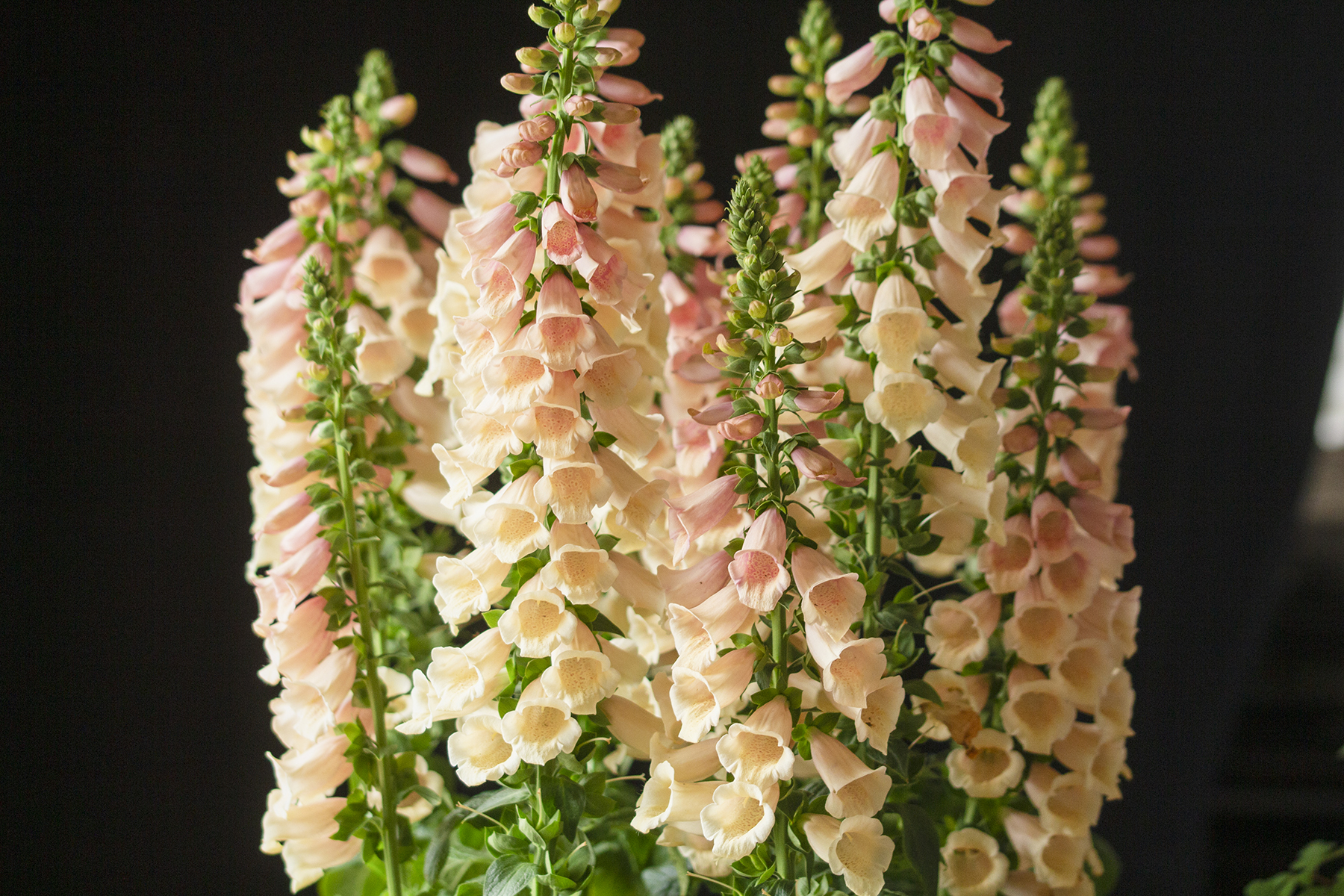
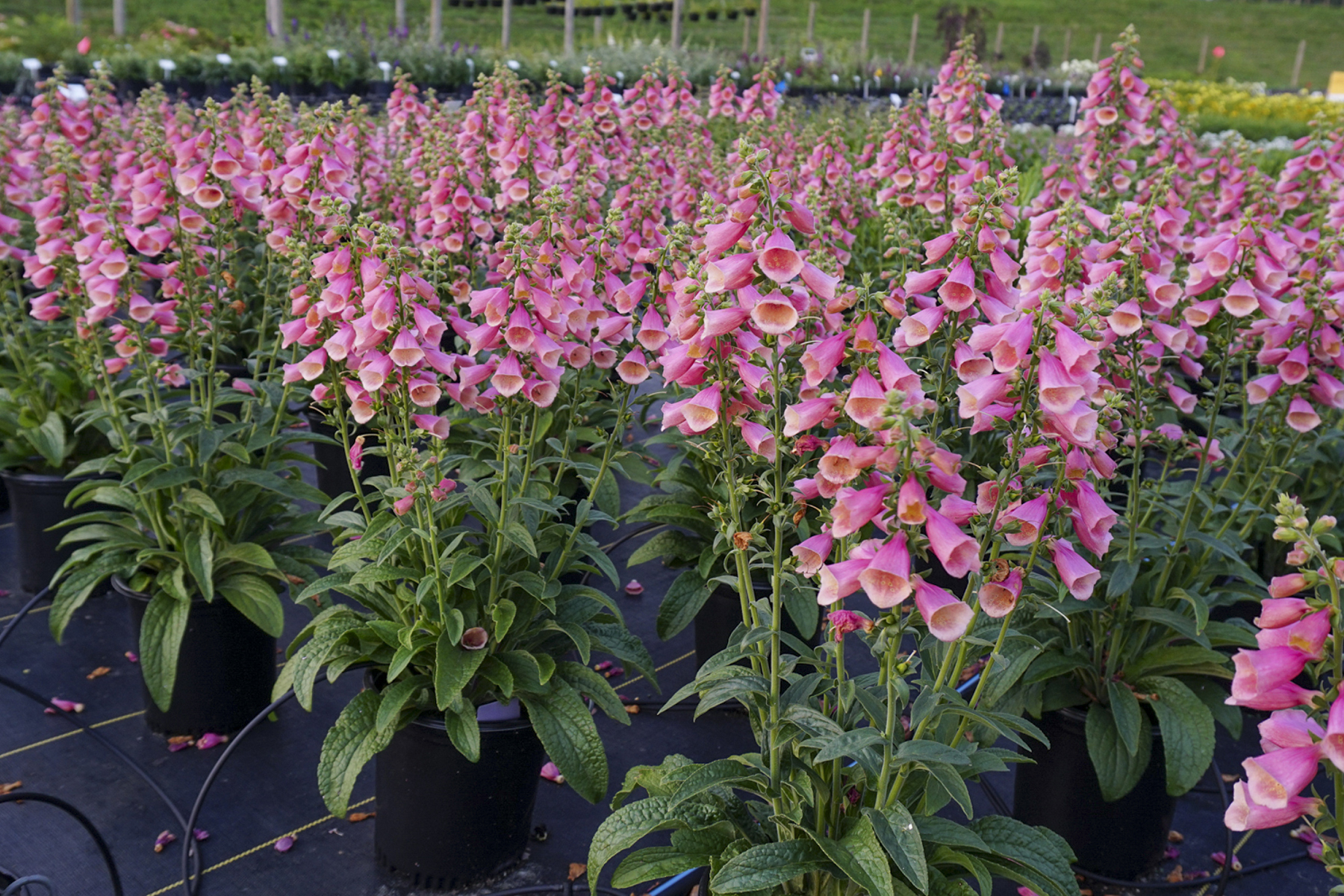
Dalmation Peach showcases the classic reason why foxgloves exist as a garden citizen: tall stems, big florets, lots of spikes. A major reason for the popularity of this particular color are the very pale spots that fade into the trumpet, emphasizing the towers of graduated peach instead. If you look carefully, you won't see this trait in other series.
Walk Through the Digitalis
Tray sales for digitalis are dominated by traditional buyers with established habits. Once they find something they like, they stick to their trusted varieties. That trust goes up the supply chain. Gardeners buy their favorites each year, which means the garden centers source those same varieties, which means the liner producers make most of their sales satisfying existing demand.
I have seen digitalis sold successfully through the chains as a premium perennial in large pots. The trick in this channel is to underserve the market. Digitalis sells fast in its prime but crashes the moment the florets come off the plants. Storms and bad weather can knock them around. If you program the crop as once-and-done, you ship just enough inventory to get the market excited to clear the bench. It’s not trash if it’s sold.
Garden centers have a longer, gentler sales cycle for digitalis, so they historically do well offering the crop. Most digitalis retails through the home garden sector as a result. It’s a specialty crop for garden centers and high-end landscapers who promote it as a special statement, or perhaps a nod to nostalgia. Plug trays generally go to growers who plant them out in the fall, bulk them up over winter, and sell for earlier spring flower sales. Watch for aphids; otherwise, you’ll be fine. Although generally a sunny plant, southern gardens (beyond zone 8) should consider planting digitalis with partial or full shade cover, depending on the spring heat.
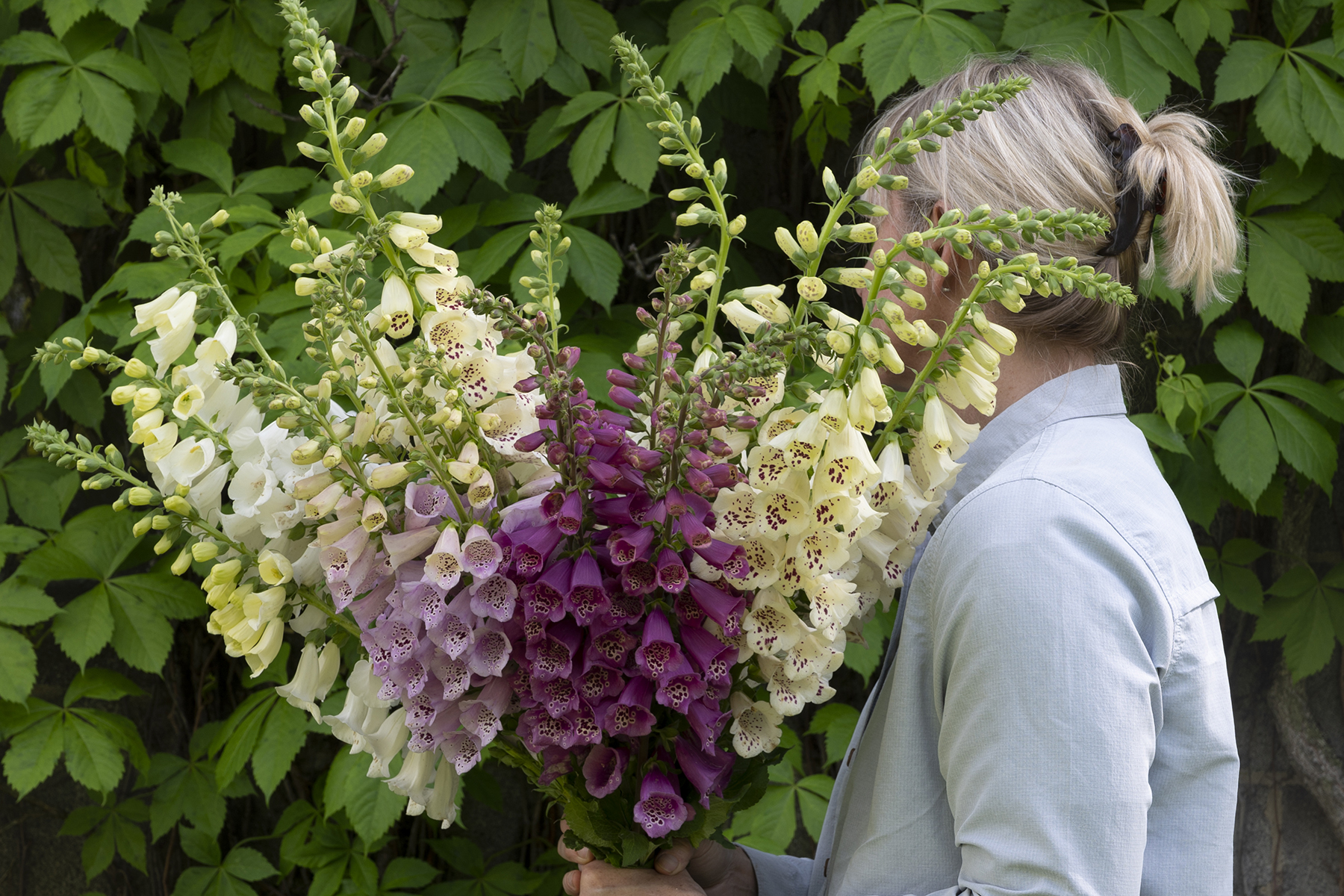
A mix of Camelot colors in a bouquet. Don't overlook the role of Digitalis in the cut flower garden. That popularity powers sales through the garden center channel.
Some perennials like gaillardia or salvia don’t benefit from vernalization. They’re so prolific without it, why not cut down the crop time? Other perennials, such as digitalis, strongly benefit from vernalization, even the first year flowering (FYF) varieties..
On the calendar, the sweet spot for vernalization occurs as the pot is growing out, after the plug is planted. To get maximum bulk from the digitalis crop, plant the plugs in the fall. Pots vernalize over the winter for the biggest displays and the most reliable results. For example, Kube-Pak sells finished pots of 9-in. digitalis in flower. To get a predictable product, they vernalize their entire potted crop for the high-quality flowers, even FYF varieties like the Dottie series. Without question. Digitalis just works that way.
A crop Arctic Fox in finished nursery pots. This series is one of the interspecific innovators of the category. Not as big, not as tall as the usual foxglove, it trades size for longetivity. The plant will come back for several seasons, not just the usual two.
Notes on the Varieties
The plug program at Kube-Pak offers a range of digitalis cultivars from the following series:
- Camelot: Very vigorous. Well-established series for decades. Trusted by buyers.
- Dalmatian: Similar to Camelot. Less vigorous. Peach is very popular.
- Dottie: FYF. Flowers are stronger the second year.
- Excelsior: Taller variety. Can reach 60 inches when happy. Blooms later in the spring.
- Foxy: Well-known series to the buyers.
- Hanabee: Newest FYF variety.
- Strawberry: Thicker leaf with darker foliage. Different look.
Although digitalis is dominated by its history, trends do appear. The most interesting innovations are the interspecific cultivars like Arctic Fox and Panther that extend the lifespan beyond a biennial. These plants go beyond two years, more like three to five. Flower spikes are not as tall, two rather than three feet, but they come back more often.
- Arctic Fox: Comes in two colors, Rose and Lemon Cream. Blooms around May–June.
- Panther: Comes in a rosy-pink. Noted for its repeat bloom within a season.
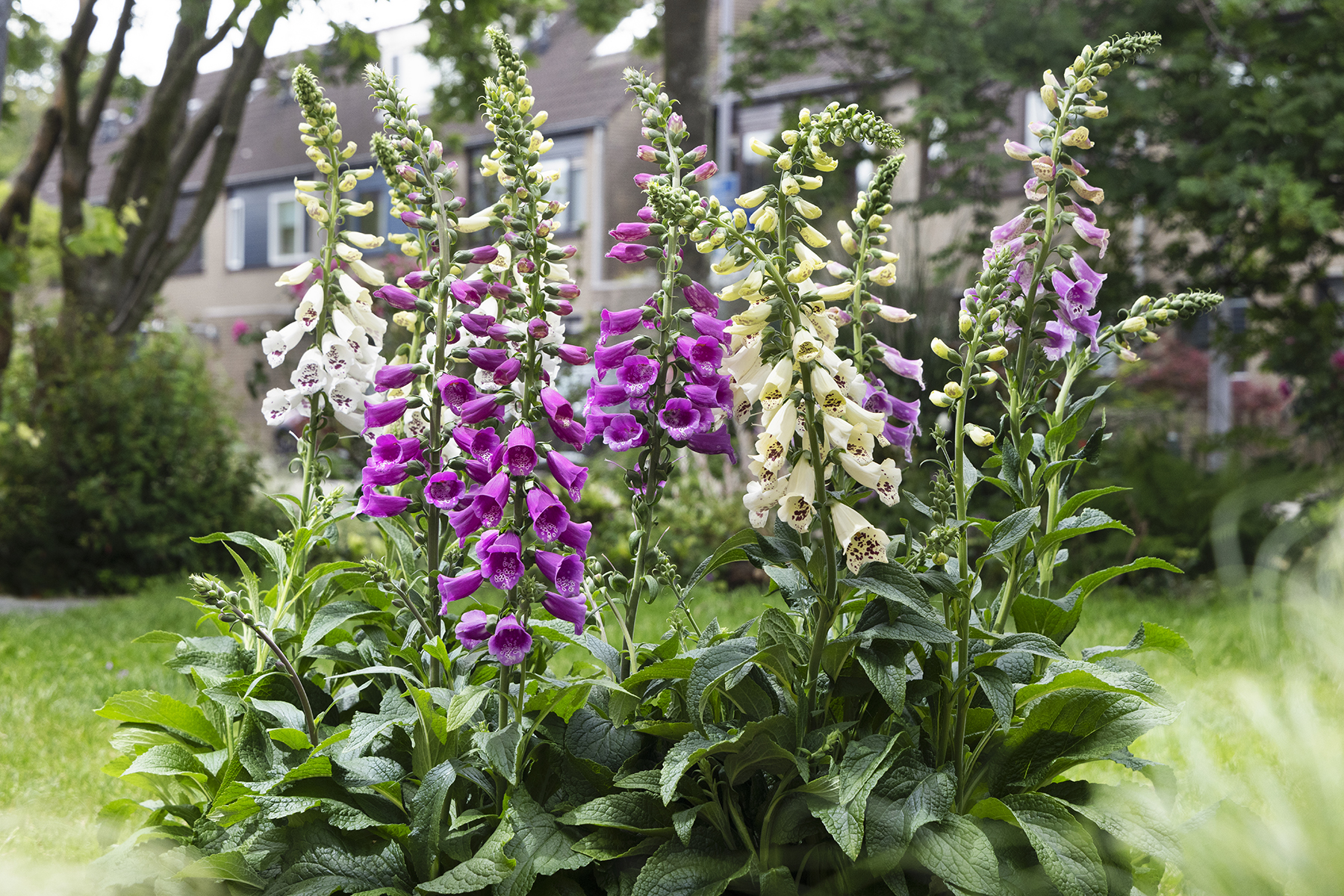
This photo of mixed Dottie colors, a first year flowering variety, shows the large leaf and robut habit typical of the genus. The plant in a 9-inch finished pot is a substantial creature.