Monarch Magic is in an interesting place right now. Introduced to the industry at CAST25, the cultivar has worked for a year in the wild. Actual sales numbers paint an interesting picture about market adoption. Larger second orders mean growers have moved from testing the product to trusting the product. A pattern emerges that explains who likes the plant and why.
Monarch Magic will bury the dead ones with new folar grown over them.
Monarch Magic in baskets
Ask around. The big boom-back mentions basketwork time and again. Several reasons pop to the top.
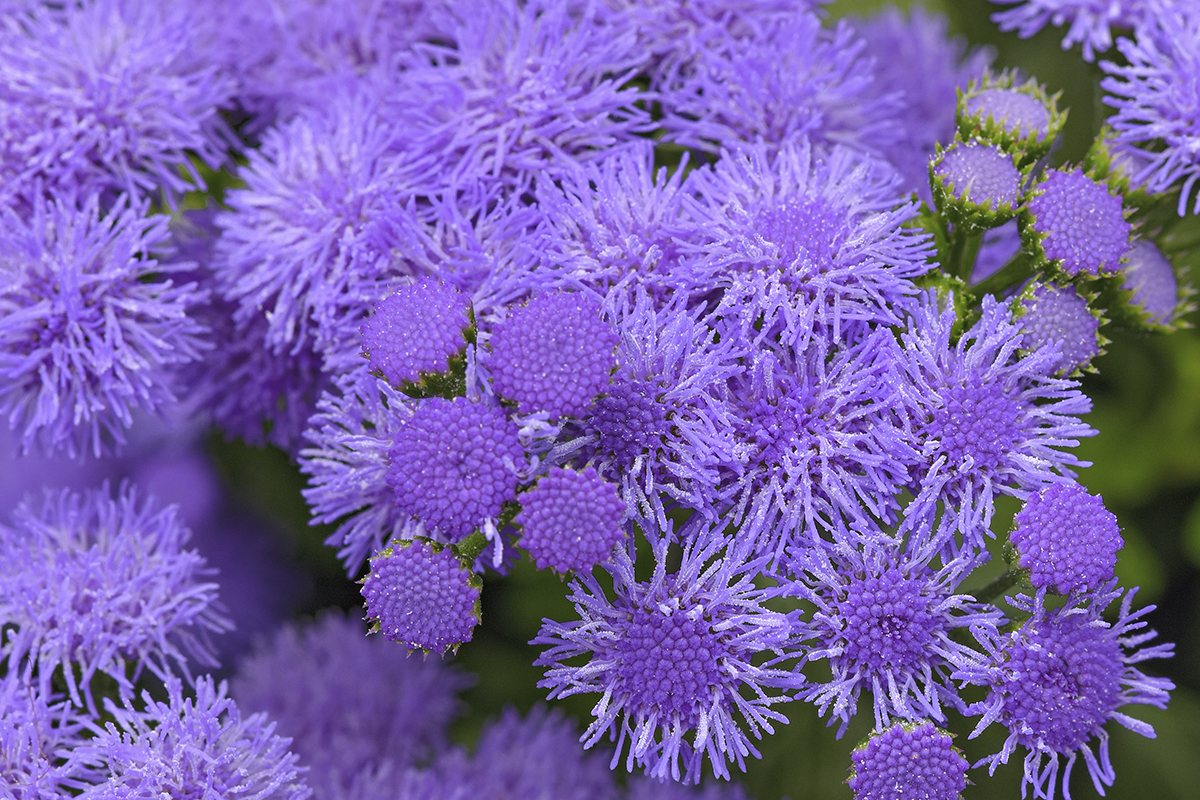
Monarch Magic trails. Most ageratums don’t do this, but those are seed varieties. This is a vegetative ageratum that sends out stems longer than usual, looking over the edge of a container. It doesn’t lean over like spreading angelonias, or tumble over like tuberous begonias. Monarch Magic hits the basket sweet spot: far out enough to be fluffy and full but not spilling over to interfere with loading carts.
Blue is an obvious reason. Lobelias are blue, yes, but they are easy to fry. Monarch Magic works on the warmer side of spring into early summer. Bonus: it hides its dead beneath new floral growth, a good basket trait.
The habit is wide with a slow rising mound toward the center.
Durability is key. Ageratums are known as tough little guys that can sweat out rough bed conditions. In my opinion, life in a basket is tougher than any bed because there’s so little soil to buffer temperature and moisture swings. Monarch Magic rolls with the punches.
A generally open habit allows other basket denizens to weave their way among the foliage. Protocols and timing may need to be adjusted when adding Monarch Magic but basket growers naturally expect to do that.
Vigor picks up the pace. Most ageratums get lost among the foliage but Monarch Magic keeps up with other quick-growing basket stalwarts. To keep it from taking over, pair it with compact varieties like any of the following:
-
ANGELONIA: Guardian Angel series
-
CALIBRACHOA: Cabaret series, Bumblebee series
-
LANTANA: Lucky series, Shamrock series
-
PETUNIA: Bee’s Knees
-
PETCHOA: EnViva series
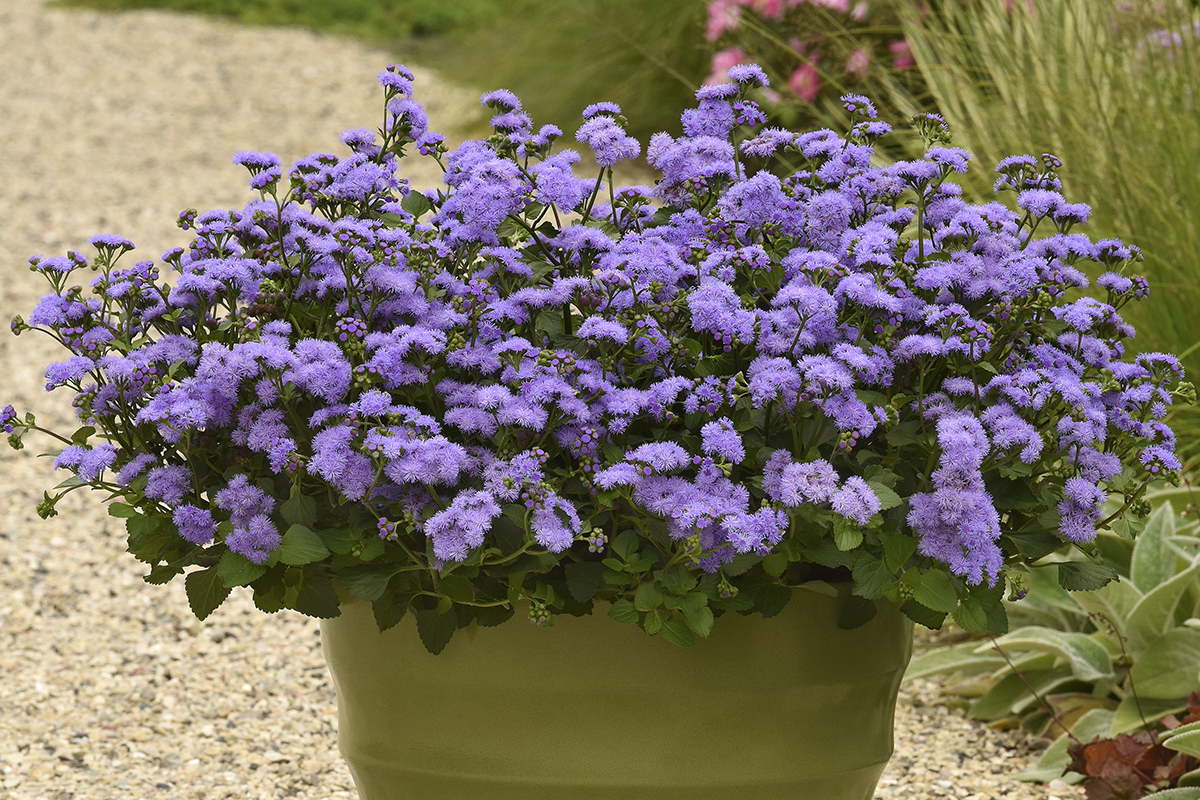
Compare the height of Monarch magic to the angelonias in the back. Color runs from soil to top.

Monarch Magic in beds
In landscape beds, the difference is less stark. Monarch Magic is a spreader akin to pansies, verbenas, and petunias. If you’ve worked with these crops, you can poach those figures to calculate the cost per foot of Monarch Magic for a standard bed.
General puffiness adds height and airiness for fluffy vs flat beds. Seed cultivars tend to go low and create sheets of color. Monarch Magic poofs and mounds to blanket a bed with color. A word of warning: if you dry the plant down too much, it will go out of flower. In the end, it’s an ageratum, not a drought solution.
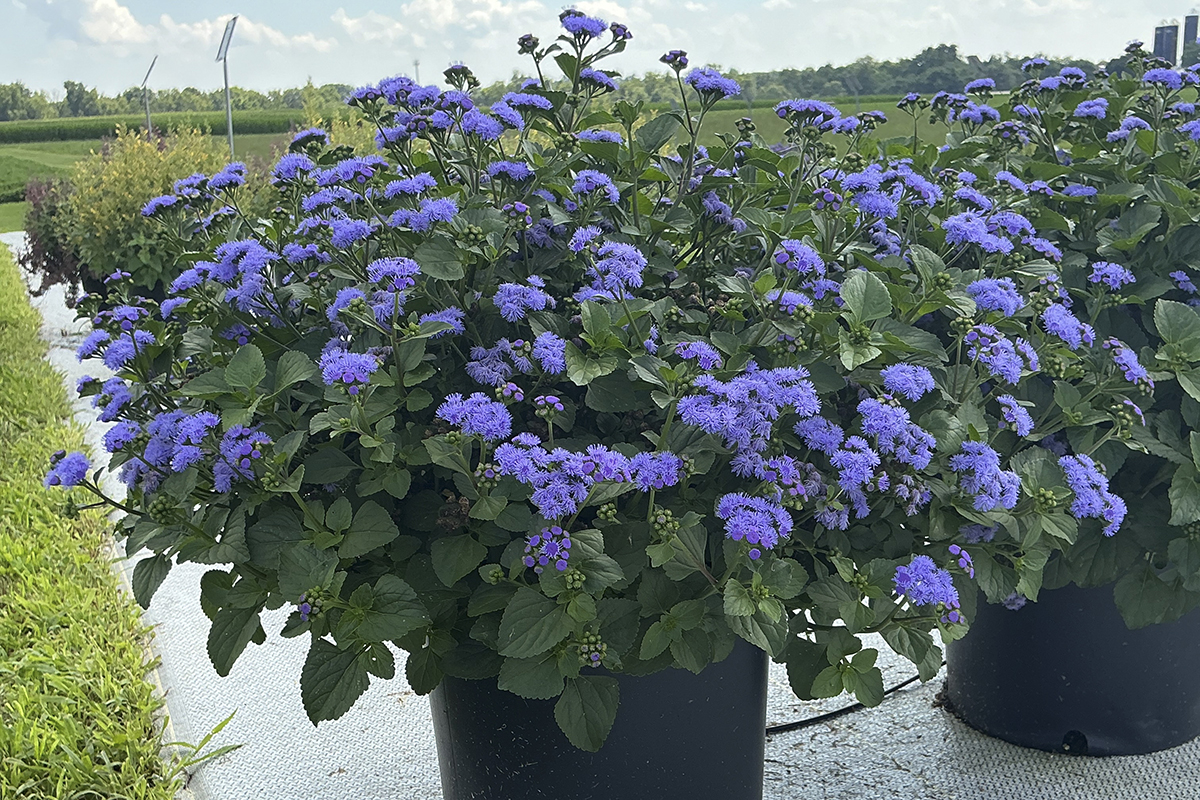
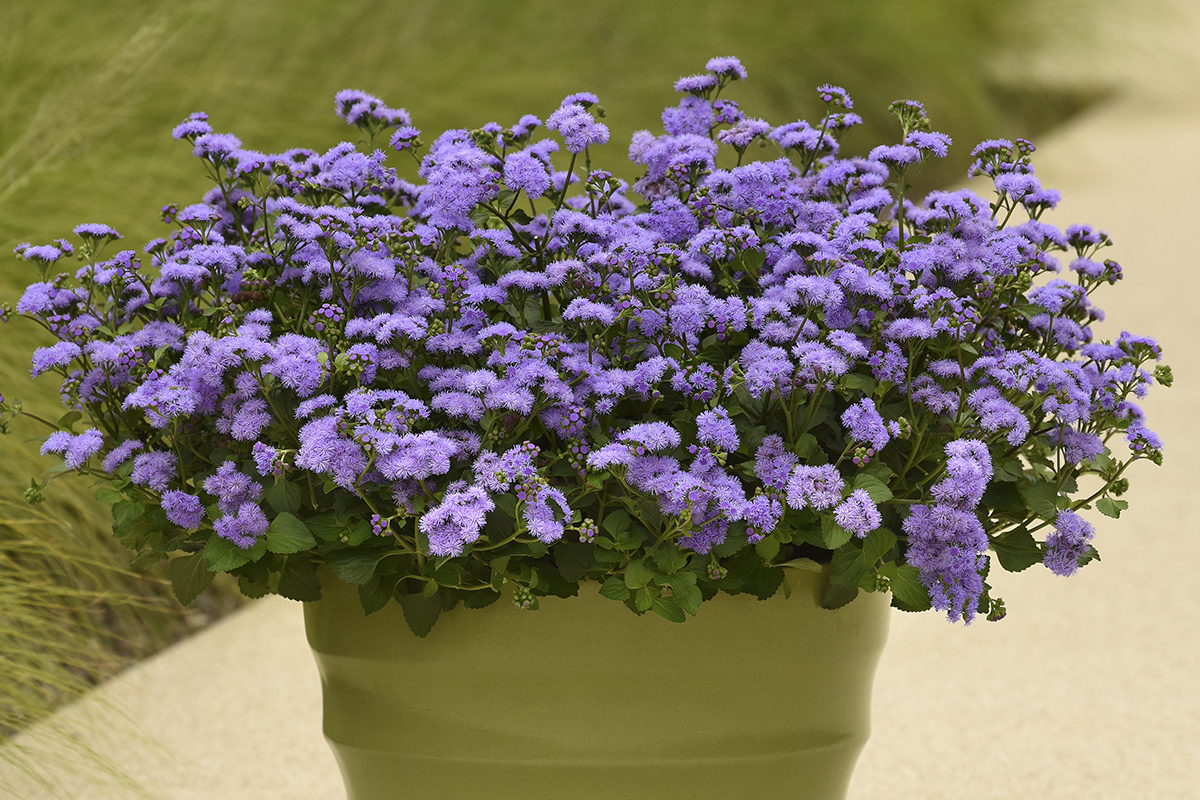
Specimens grown in large nursery pots look like those in the trial photo from Penn State. This size generally grows 12 inches tall by 18 to 20 inches wide. When planted in a full landscape bed, it offers a lightly mounded surface. Monarch Magic is not a begonia gumdrop or a chrysanthemum centered dome, but somewhere between a bed of Beacon impatiens and Lucky lantanas that create a wavy surface. Ambient temperature/display sequence goes nemesia->ageratum->lantana.
A specimen of Monarch Magic grown at the 2025 Penn State Field Trials.
That pollinator magic
Monarch Magic is an outlier that does what other ageratums don’t—it attracts beneficials. This one reason powered the decision at BallFloraPlant to push the cultivar into A-tier status with an equivalent launch: major marketing campaign, lots of noise, and generous POP support. BallFlora’s faith is supported by the various breeding and testing trials conducted. All participants commented on the clouds of butterflies Monarch Magic attracted.
-
UGA Plant of Distinction: “Showstopping blue flowers and ability to track butterflies.” Large number of butterflies was highlighted; vigorous spreading habit was noted.
-
Penn State: Significantly large plants grown in black containers stayed in flower July through August, 2025.
Better yet, ask the growers who reordered for the 2026 retail season. They’ll answer, “Pollinators…” and a bunch of other reasons but the conversation always swings back to butterflies. Oh, the butterflies! BallFlora even stuck one in the name. Note: a cluster of Monarch Magic hauls in more butterflies than a single specimen.
If the soil sits down a little from the lip, Monarch Magic will raise its shoulders.
Retail behavior
Right now, it seems the garden centers have sussed it out, as sales uptick is strongly biased toward the IGC channel. Independents build more kinds of baskets, so they’re always on the lookout for new components. IGCs also have more flexibility/less risk compared to chains that have to make large block purchases.
Monarch Magic can help you build an experience based around pollinators that the chains haven’t noticed yet. If you’re interested, BallFlora offers preprinted POP items including butterfly stickers, posters, cards, tags, and pot decals to promote the pollinator benefit. Plant purchases can be very impulsive, and effective nearby signage helps answer any questions consumers may have regarding new cultivars. These materials are available for purchase from BallFlora in small lots appropriate for IGCs. Check WebTrack for details.