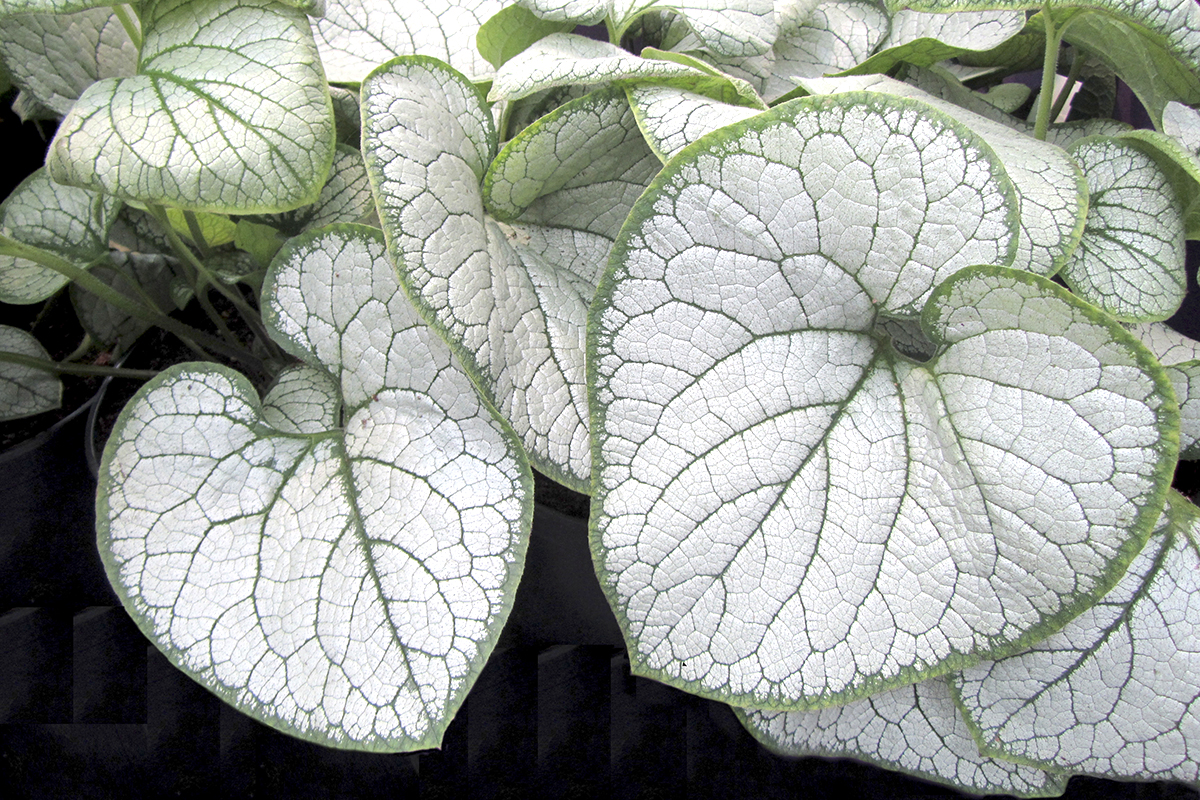
Beyond 'Jack Frost', consider a heat tolerant variety like 'Permafrost'. One of the traits holding brunnera sales back is the summer melt—when the heat kicks in, the plant collapses until the following spring reinvigorates it. In general, brunnera is sold as a firmly spring citizen of the shade garden, but 'Permafrost' lasts much longer into the summer and can even handle gardens with mixed sun and shade. It has learned to tolerate drier areas better than the usual crowd. This is a Northern statement, by the way, important to IGCs in the garden belt from Boston and New York to Chicago and St. Louis, and back to DC.
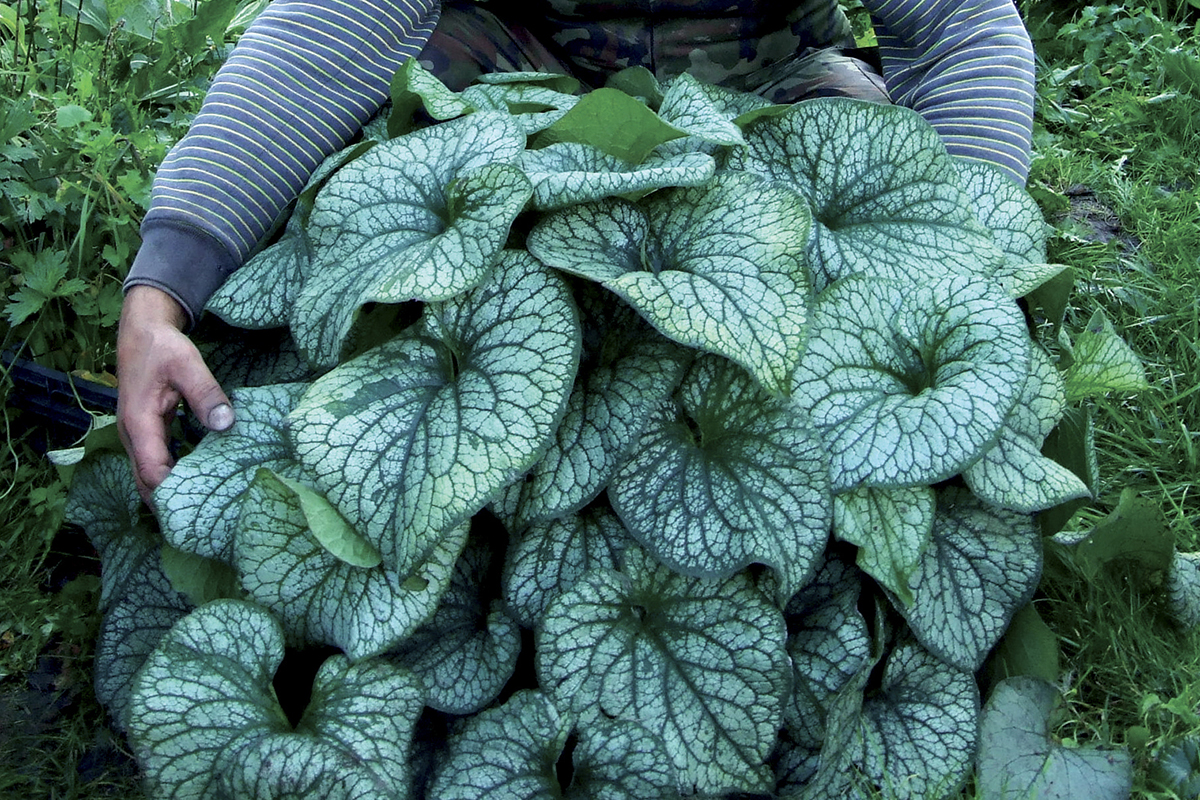
Alexander's Great is the big one. Leaf sizes can get into hosta territory on mature plantings, so long as they are well-sited.
Heat tolerance is a significant improvement for brunnera. It translates into a better retail season before the sale and strong garden performance afterward. 'Permafrost' isn’t doing anything revolutionary, but it still expands the boundaries of what a good brunnera can do, not by changing the patterns or colors but by pushing the summer leaf.
Several cultivars now advertise summer performance as a selling feature, with new ones leapfrogging over older ones. Breeders are taking brunnera and making it more brunner-y, distilling a popular template into a more concentrated form and making it last longer. I expect this feature to become the catalyst for future sales growth.
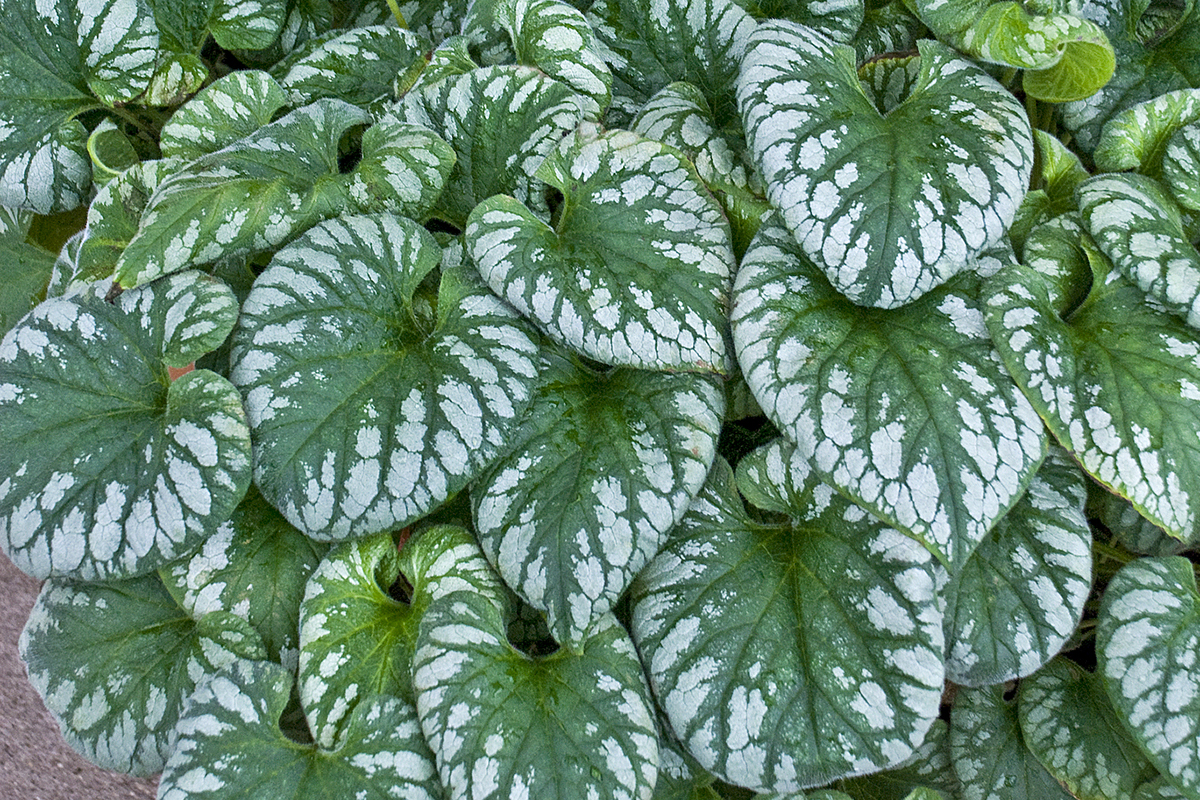
Most commercial brunneras follow the Jack Frost template, but not Emerald Mist. It strikes out with its own markings.
Alternative Leaves
Size Matters: One of the three major display variations among brunnera is leaf size. A good example is 'Alexander’s Great'. When the cultivar matures, it can send out leaves in the size range of a standard hosta, complete with strong mottling. Also worth noting is the conditional nature of brunnera leaf size: the happier the plant, the bigger the leaf.
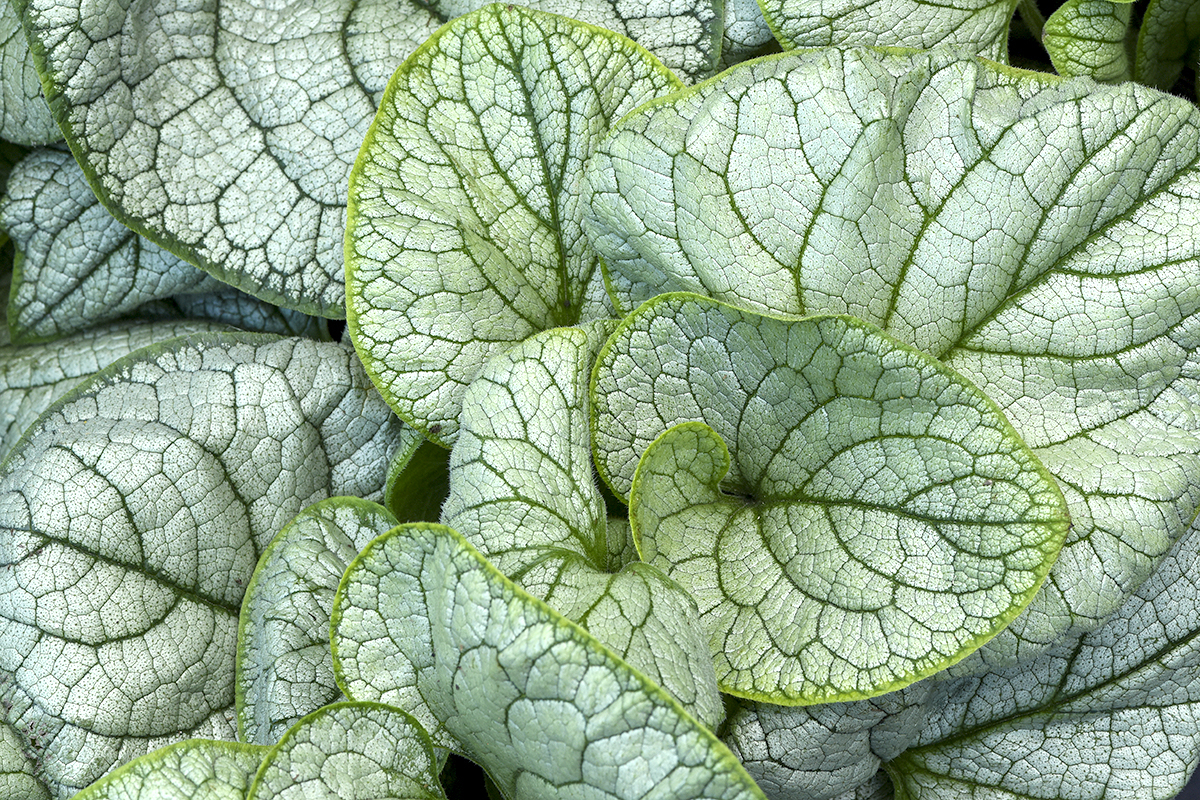
Silver Tops: Another area where variation occurs is in the amount of silvery felt over the leaves. Generally, the fuzzier the leaf, the more deer resistance a cultivar exhibits. Good examples are 'Looking Glass' (very silvery), 'Silver Heart' (heat tolerant and silvery), and 'Queen of Diamonds' (large and silvery).
Different Crackling (or not): Crackling patterns can differ between cultivars. Most brunneras sold in the commercial channel follow the very popular crackling found in 'Jack Frost', but exceptions do exist. 'Emerald Mist' has a more mottled than crackled look. 'Variegata' has widely variable cream margins. B. macrophylla is entirely green and emphasizes the forget-me-not sprays. 'Langtrees' is the old-timey source for 'Jack Frost' and shows early markings of what 'Jack Frost' would become.
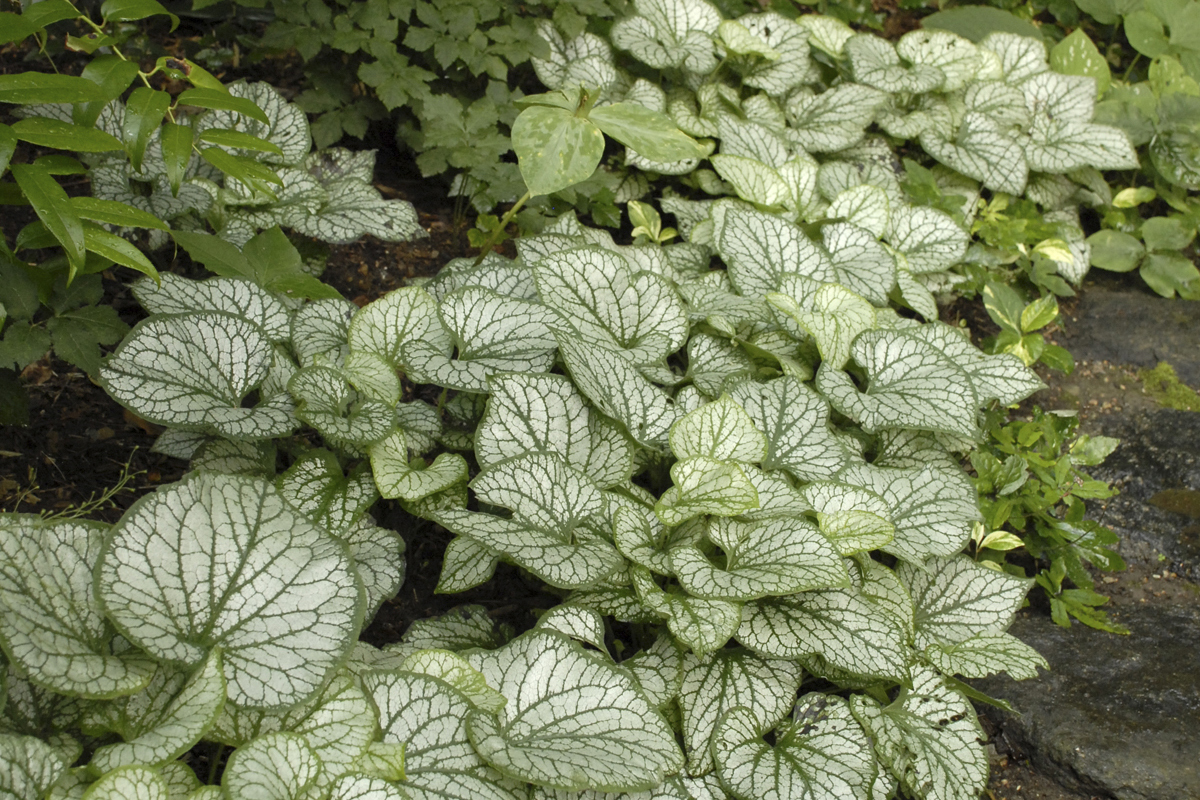
A landscape planting of Jack Frost in spring. Bright leaves in dark shade gardens is the primary reason why gardeners buy into this genus.
Brunnera Sales Going Forward
Brunneras come in a simple foliage-first box set: crackles and silvers in regular and large leaf sizes. Heat tolerance is building momentum, but that’s an invisible benefit on the retail bench. Brunneras are the exception to the typical rules of strong sales. They don’t have the usual markets of dramatic breakthroughs in color or form to ignite a revenue growth.
The jump in brunnera sales is probably the result of two factors. One is the increase in shaded gardens caused by the re-wilding of American homes. There are more trees in more places as a general rule. Products like pulmonaria, astilbe, and polemonium have all jumped their numbers because they are easily recognized as desirable shade plants.
Permafrost is the heat tolerant one that lasts the longest the longest into summer. This brunnera can deal with drier areas than its compatriots, so it can even handle some mixed sun falling on it.
Deer resistance is the other key factor. Brunnera is the closest genus to hosta in looks and behavior, and the terry cloth quality of the leaves discourages animals from damaging the plant. Rough texture is one of the hallmarks of a deer resistant variety.
Firms with a heavy commitment to hostas are well-served by expanding their brunnera programs. Brunnera is often considered a deer-resistant alternative to hosta where the animal is a pest. Hosta sales are down while brunnera sales are up, partially because brunnera has that hosta-like dynamic so popular in the market now.
Silver Heart shows the silvery silverness that brunnera can deliver when the amp is dialed up to eleven.