Plant breeding, that patient marriage of science and hope, occasionally produces a variety that ignores the original assignment. Breeders typically work toward specific goals: improved vigor, better branching, disease resistance, larger flowers, or enhanced color patterns.
Once in a while, a new seedling arrives unexpectedly mid-course. Such is the serendipitous story behind Syngenta’s Pretty Little geranium series. And, like other chance discoveries, it took geraniums down an unexplored path.
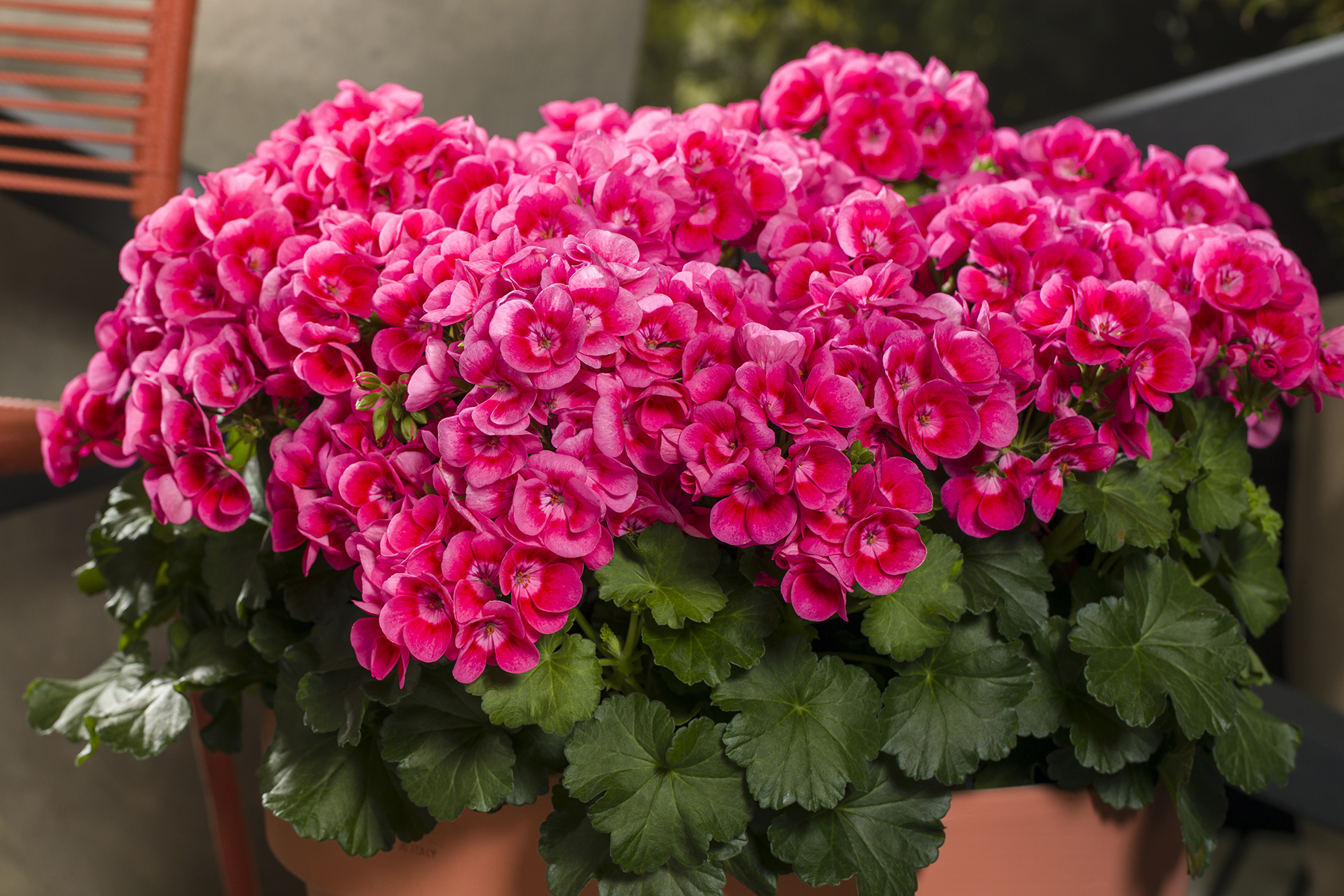
Placed in a larger pot, you can see Pretty Little's tiered approach to color, like a layer cake with frosting.
Where many geraniums might carry just a handful of three to five buds behind the first flower, Pretty Little often displays twice that number. The result is a plant determined to flower whenever possible.
Consumers may not be familiar with the term *multibloom* but they understand its implication immediately. Standing before a retail bench, they perform the small acts of judgment that gardeners have always performed. They compare. They inspect. They imagine the future of their garden.
- One plant is flowering now.
- Another appears prepared to flower for weeks.
The second plant usually wins. Flower density quickly became the defining characteristic of the Pretty Little series. Plants provide strong color coverage at retail while simultaneously displaying a visible pipeline of future blooms.
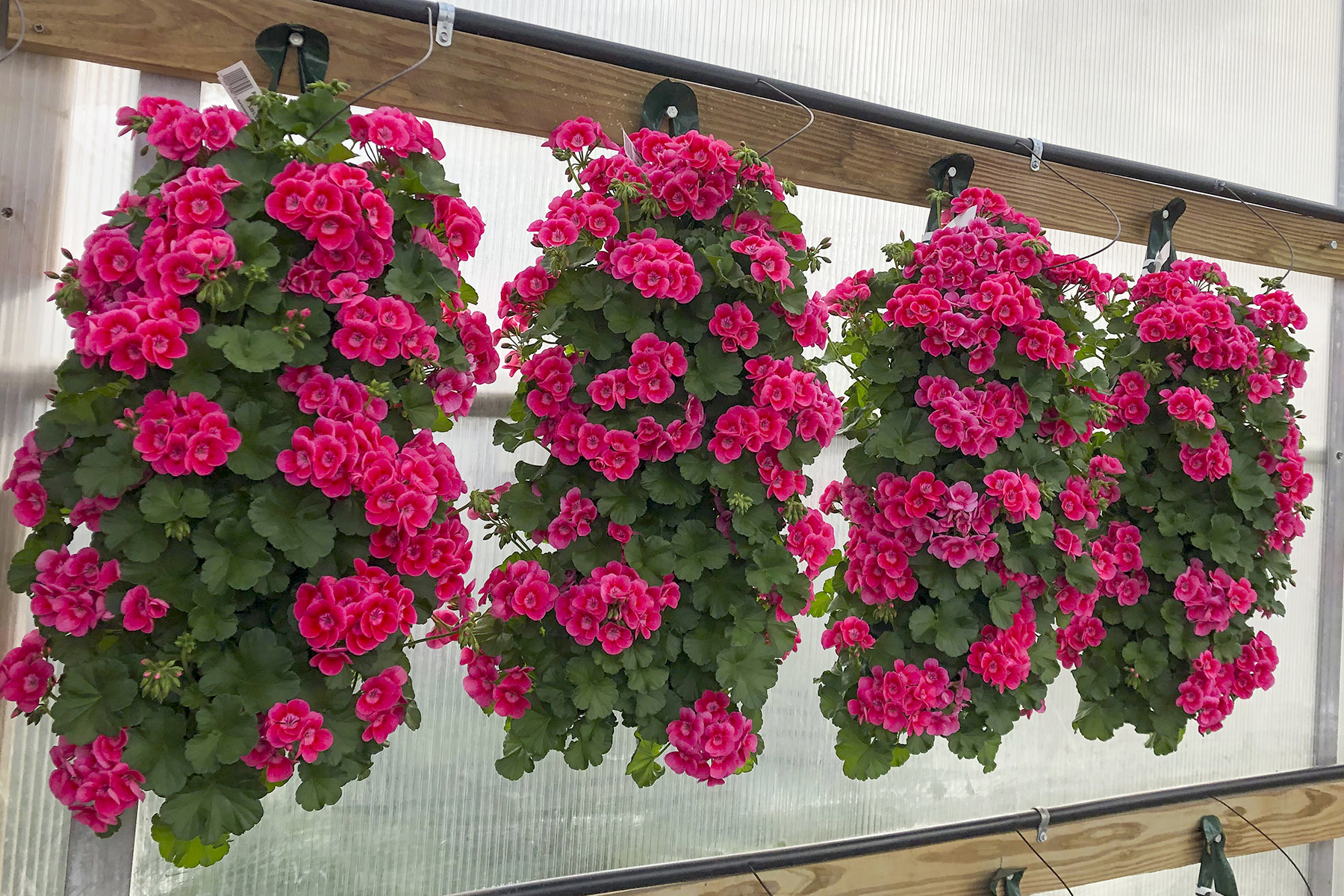
Pretty Little does well in innovative places like hanging pouches.
Time and place do count
The challenge for Syngenta is determining exactly where the plant fits into the marketplace. Although technically a geranium, Pretty Little does not perform the same role as a traditional landscaping geranium. Its compact habit, dense flowering, and continuous color make it ideally suited for smaller decorative applications.
This is a geranium well qualified for six-inch pot production. That market requires compact, color-rich products serving multiple roles in gardens, baskets, and pottery. Lots of genera do just that—petunias, calibrachoas, begonias, and pentas, for example. Now geraniums can fill the same role thanks to the Pretty Little series. These plants fill a shop-n-drop basket or container just as nicely as they line a front border or walkway.
Size is not the only reason. Production timing allows Pretty Little to sell earlier as well. Plants flower approximately two weeks before traditional geraniums, and growers can finish them alongside other six-week crops.
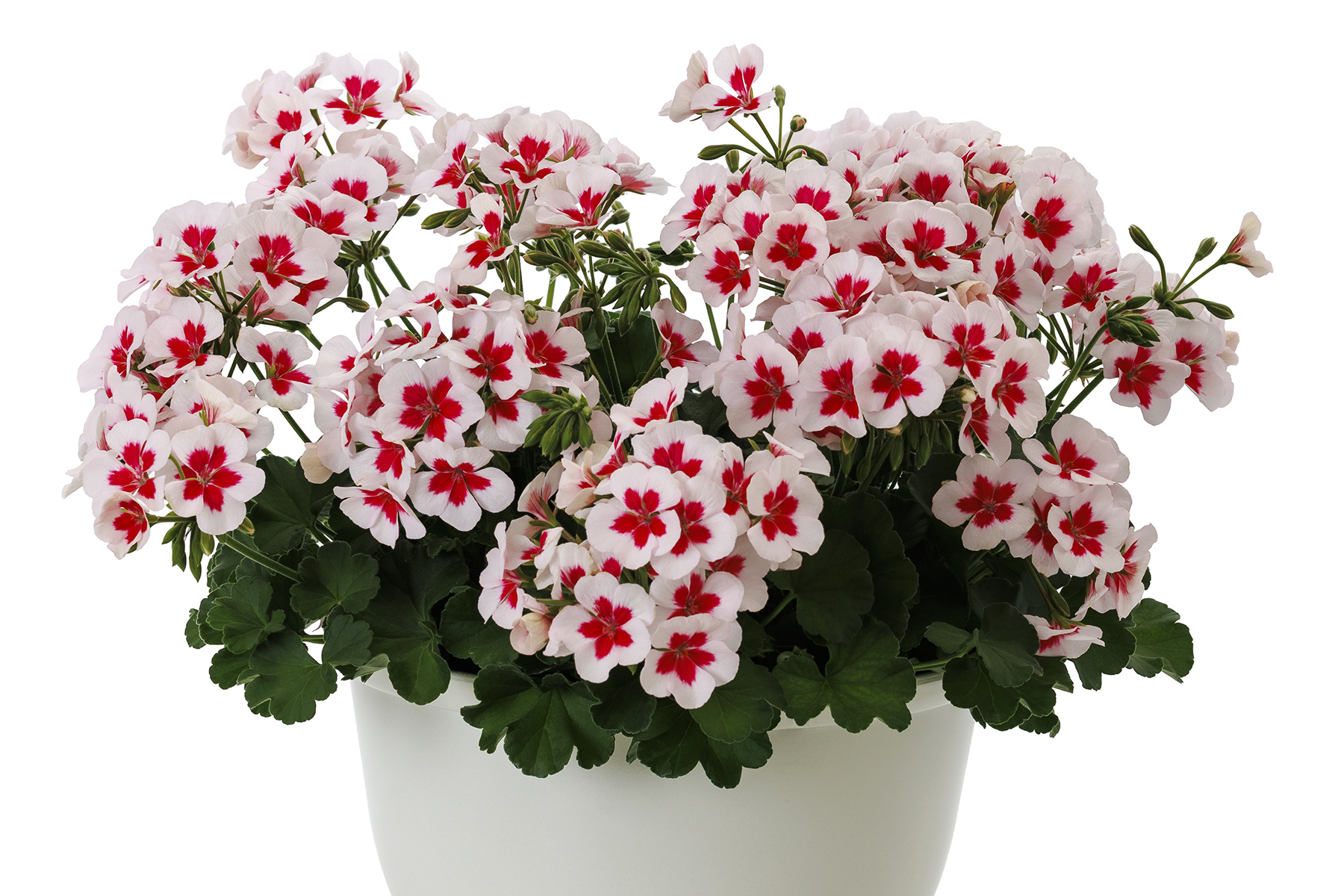
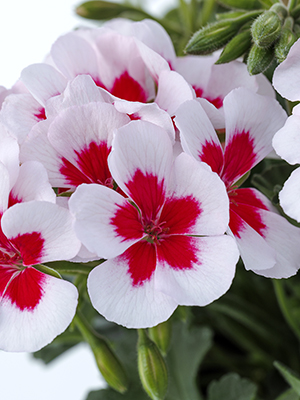
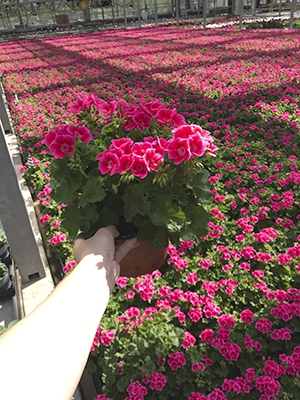
The close-ups give a pretty good idea of the central eye both geraniums have. The central photo shows an example of a six-inch pot held over a crop just opening up.
 |
 |
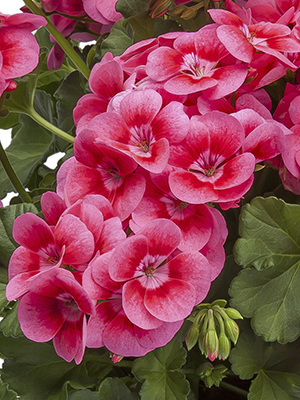 |
| Pretty Little White Splash | Pot shot over a crop | Pretty Little Pink Splash |
In fact, they can be ready in time for Mother’s Day and the big planting months of May and June. Their trigger for blooming is light accumulation, not daylength. As long as the plant racks up enough total light intensity, flowers will fire off. For most of North America, this naturally occurs south of the Great Lakes. New York State is a conversation—Long Island is fine but Albany might need a little photosynthetic lighting. Shipping week is key, and you need to count backward.
Summer performance follows the geranium script. High summer heat does surpress flowering and thunderstorms can bash them about. Visually, the display ebbs and flows, but it never goes out of color.
Growers who have the most success with this product put it in their spring container programs in some form or fashion, either as a stand-alone specimen or inside a mix. Progressives push it into containers a little out of the ordinary, to showcase its abilities. Window box decor is a good example of this trend.
Pretty Little Pink Splash at shipping.
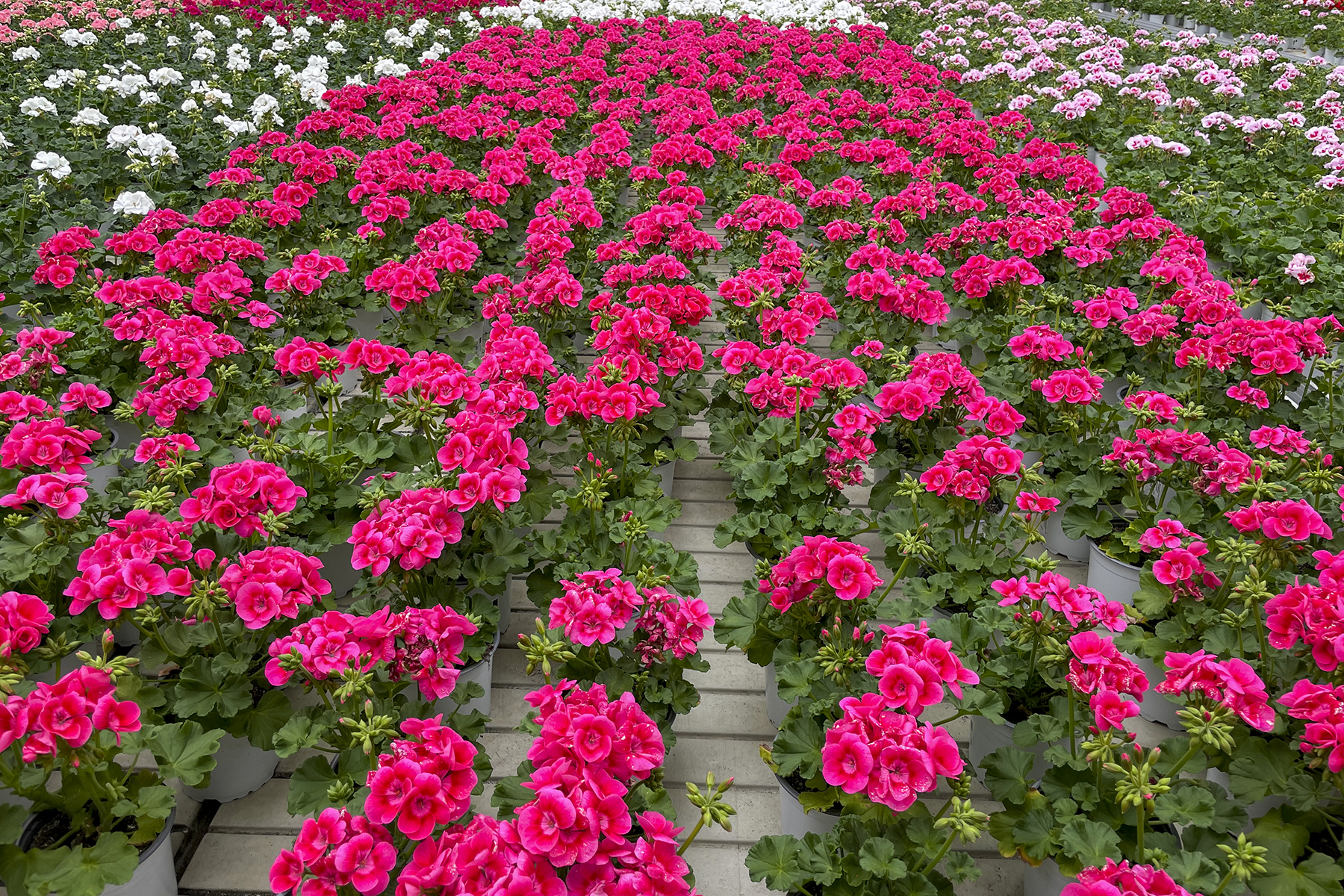
Pretty Little new one
The series took an important step forward in 2026 with the introduction of Pretty Little White Splash, the first true companion variety to Pink Splash. For Syngenta, the new introduction represented more than simply adding another color. It effectively created a second launch for the entire concept.
Displayed together, the duo create an eye-catching presentation that immediately draws attention. Individually, each variety offers a strong display. Combined, they tell a more complete story. Naturally contrasting colors complement one another, creating opportunities for mixed containers and coordinated displays that showcase the series’ unique character.
Adding White Splash to the lineup also reinforces one of Pretty Little’s greatest strengths: its ability to stand apart in an exceptionally crowded category. Its compact form and dense flower coverage rival any of the dozens of competing annuals. On the retail bench, Pretty Little looks fundamentally different from conventional geraniums. Yet despite its differences, the plant remains recognizably a geranium.
That balance between familiarity and novelty may explain much of its appeal.
Consumers encounter something new without feeling as though they are taking a risk. The plant feels both different and familiar at the same time. It delivers the trusted performance associated with geraniums while offering a fresh appearance that stands out among more traditional selections.
An example of a large pot of Pretty Little Pink Splash planted with multiple plugs