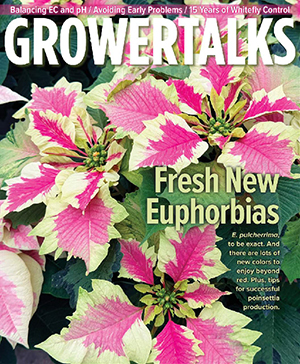
Poinsettias have this deep-seated desire to move outside the Christmas market, with orange for Thanksgiving and pinks for Valentine’s Day. However, the economics of poinsettias grind against the gears. Points are slow growing, but they retail when there are very few alternatives. They succeed because they keep the lights on and the staff busy just as much as pleasing the customer.
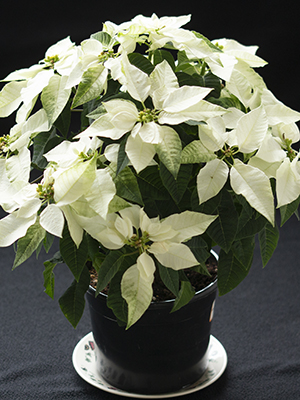
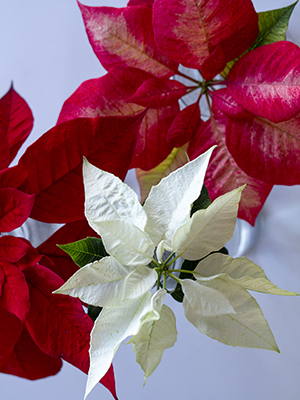
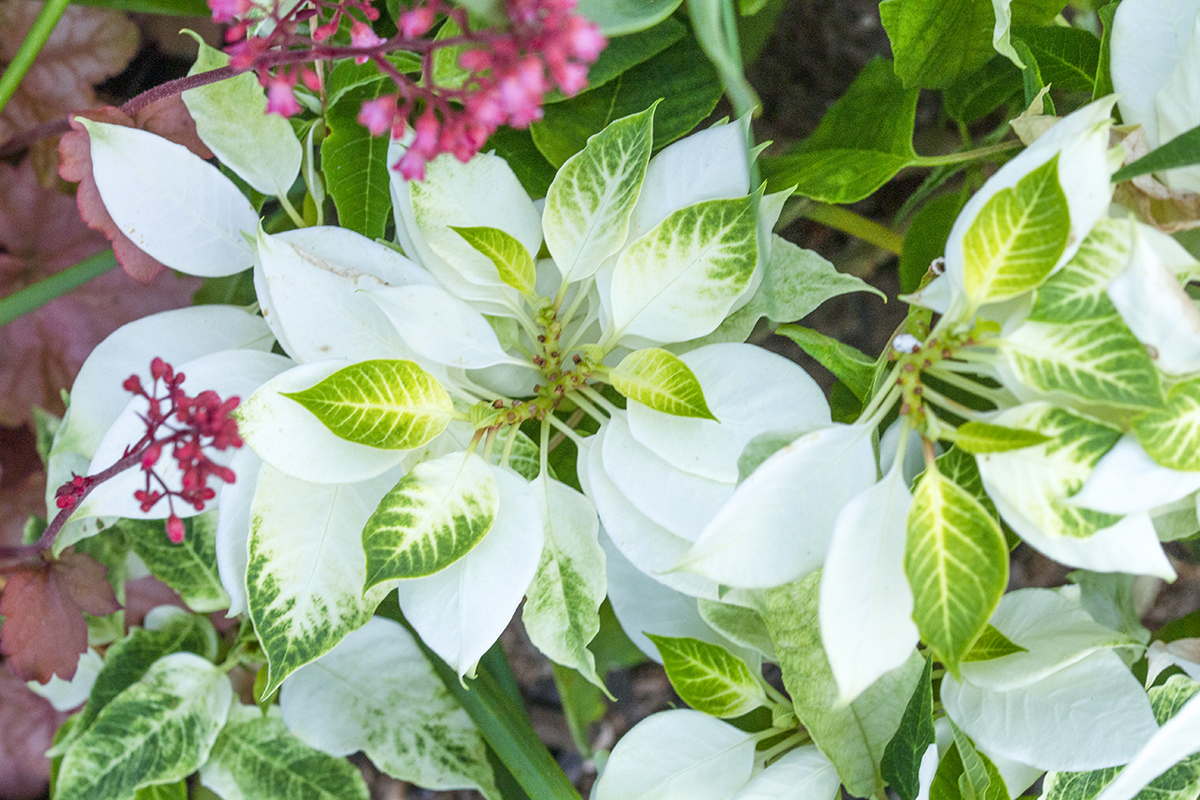
Princettias will mound out if grown as a houseplant with color down the sides. Pure White market strength comes from its linen-like white and premium texture to its bracts.
 |
 |
 |
| Princettia Pure White in a pot |
Princettia Pure White against Picasso and Christmas Beauty |
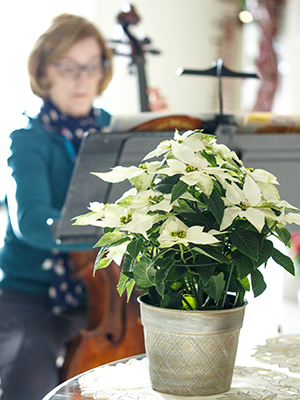
Princettia Pure White at a St. Louis Cello Concert |
Princettias easily last in color through spring and early summer. Dropped in the garden as an exotic annual, they take on a personality of their own. This plant sat among the Heuchera on June 01.
Possible choices
PRINCETTIA SERIES: Many houseplant features emerge straight out of the cutting: dense branching and heavy color with very small bracts and lots of them. Habit is very compact, so fewer PGRs are required and maybe not even a pinch, depending on pot size. For larger pots, stick cuttings earlier or switch to the Princettia Queen series.
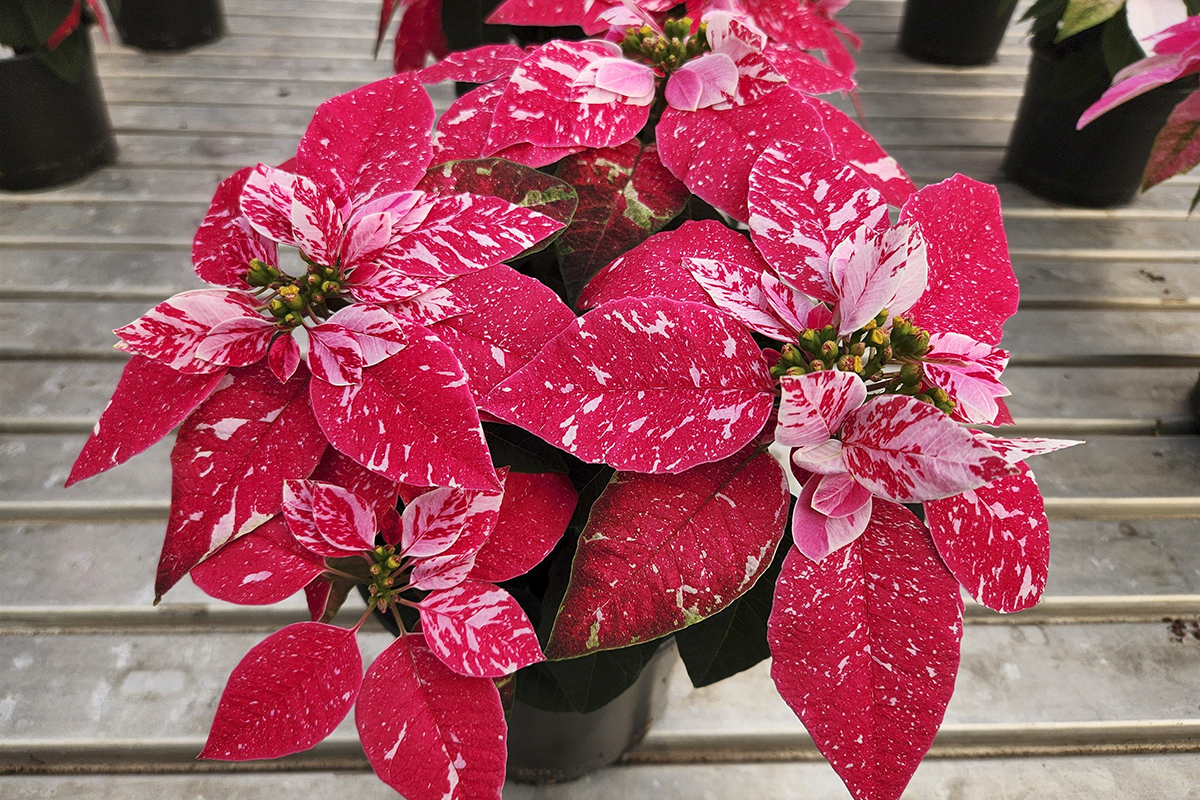
Sparkling Rouge has an unusual varigation pattern. Older bracts that emerge first have a light pattern. Later bracts have a much heavier pattern, creating a two-toned layered look. Very unusual.
New color bracts emerge throughout the winter. Cyathia drop, stems extend, and the product becomes less Christmas and more euphorbia in the home. Once frost is past, the poinsettia can be dropped into a garden bed as an exotic spring annual. Plant it in the shade, among the hosta; the ones I plant in direct sun always fry. Remember, their original job was to survive on whatever winter sunlight spilled into the house.
Clean, vibrant color is Princettia’s biggest draw. Pure White is a paper white. Some of the pinks are neon highlighter. Sparkling Rosé does a funny variegation dance between lightly touched early color bracts and the heavily mottled later ones. I’ve never seen a plant do what Sparkling Rosé does, so it’s worth a look.
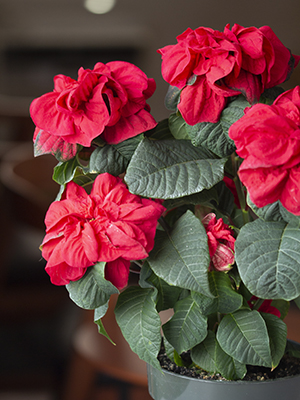
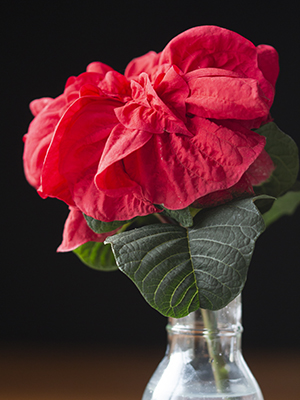
Christmas Rose is very durable with a very long color lifespan. They last well into the summer and will lose their leaves before their bracts. Sprigs make interesting table decorations placed into artisanal bottles.
 |
 |
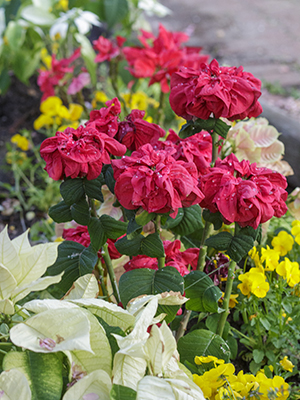 |
| Christmas Rose (houseplant 12/29) | Christmas Rose (sprig) | Christmas Rose (garden May 8) |
I bought my Winter Rose at Ganim’s (Fairfield, CT) and kept it as a houseplant well into April. In the garden, the roses hung on until midsummer and new color even emerged from the existing stems. The plant has a very V-shaped habit, more upright than outward, with strong, thick stems and a great internal structure. Use this cultivar for larger houseplant SKUs.
The Missouri Botanical Garden built a curved wall of Christmas Rose as a center attraction for their holiday showcase back in 2019.
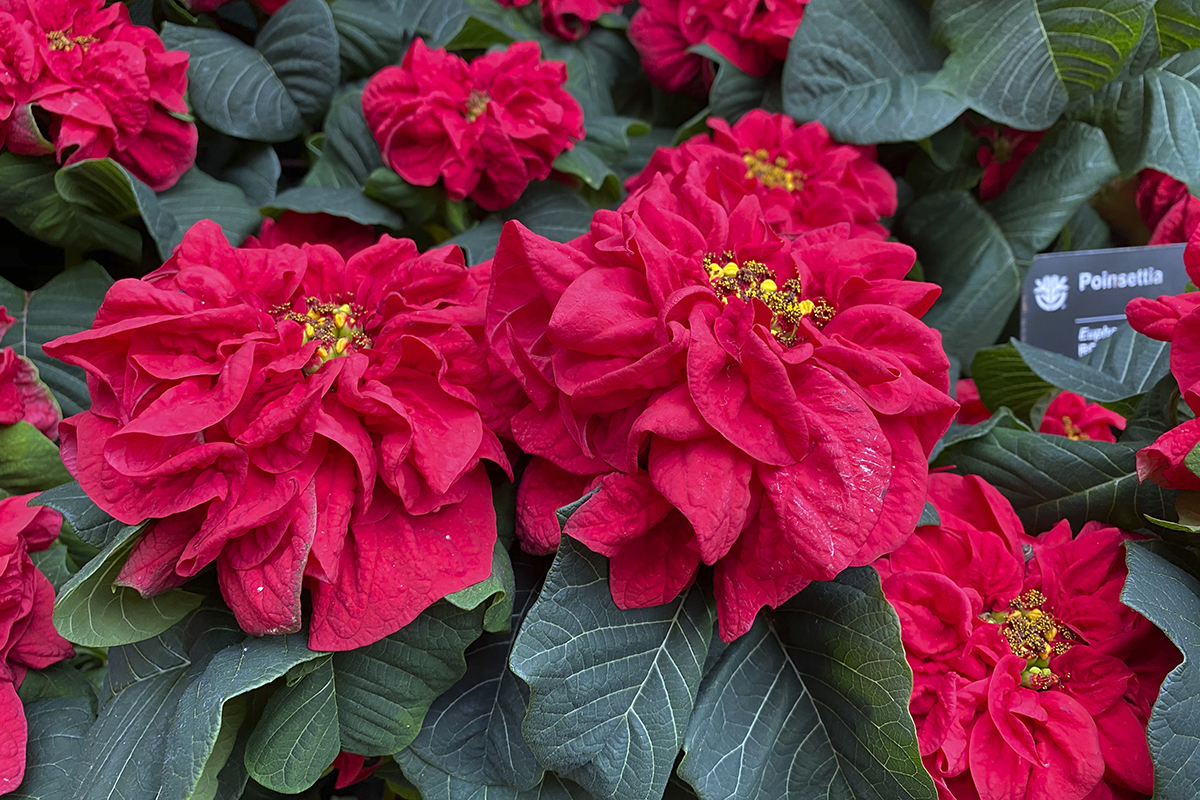
Dümmen Orange maintains the genetics these days, and they have white and pink varieties. Italian breeder Lazzeri has also taken up the challenge. Their beautiful Roccostar Red and Roccostar White have more blooms, with strong yellow centers and more scrunch in the bracts. That material can be sourced from Selecta One through their relationship with Ball Horticultural.
Tapestry likes to be a compact houseplant, capable of displaying several showy blooms on a small plant.
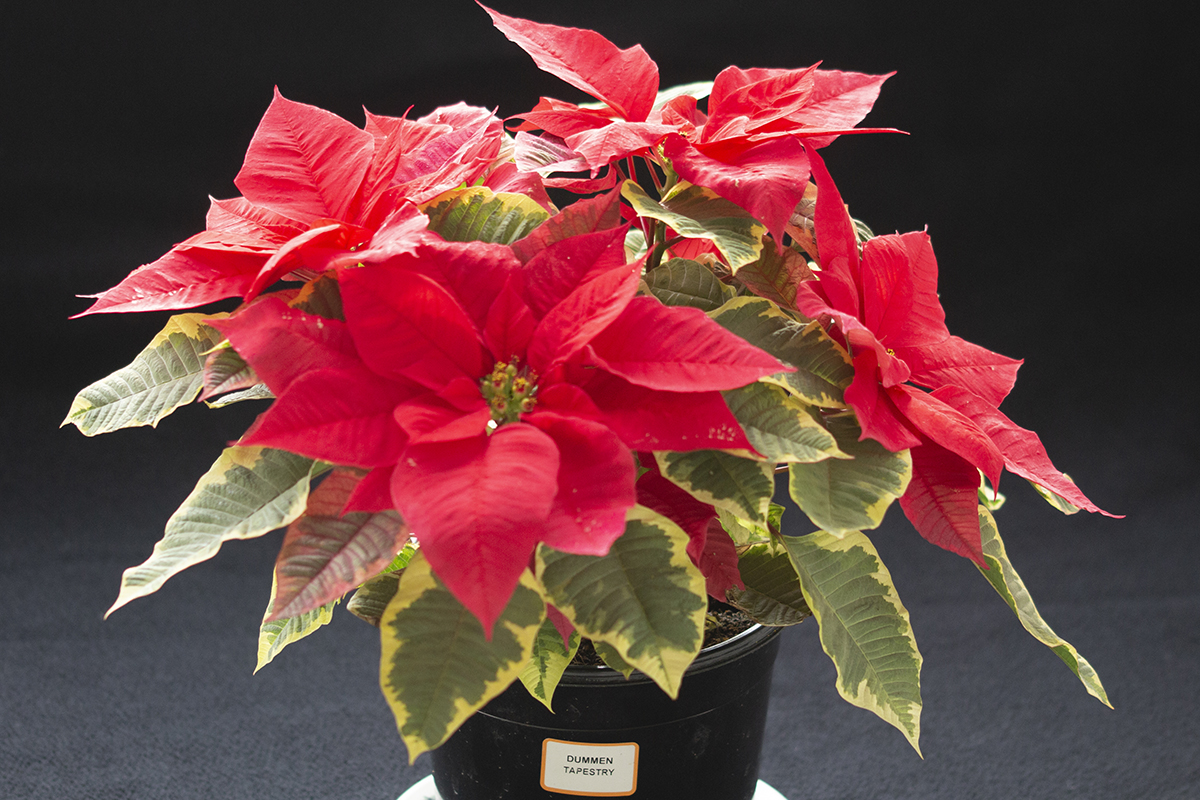
Tapestry selling point is contrast between the variegated leaves, cherry red bracts and the transition between the two.


