Daylilies have split into two worlds. At one end are familiar, economical landscape workhorses such as Stella d’Oro and Happy Returns—early, dependable, and easy to use but with relatively modest flowers.
At the other end are the modern tetraploids. Breeders have produced much larger, heavier, more elaborate flowers and substantial plants, but flowering tends to come more toward late June and through July, missing the prime spring retail window.
Then there is the issue of daylily rust that scrambled the market badly in the South. Frost kills the problem for Northern gardeners, but the rust changed the usefulness of the crop as a mass landscape perennial.
Against this backdrop comes the DayScape daylily series, a coordinated set of nine colors and styles backed by robust rust resistance. Depending on your location, however, the plant’s significant feature changes.
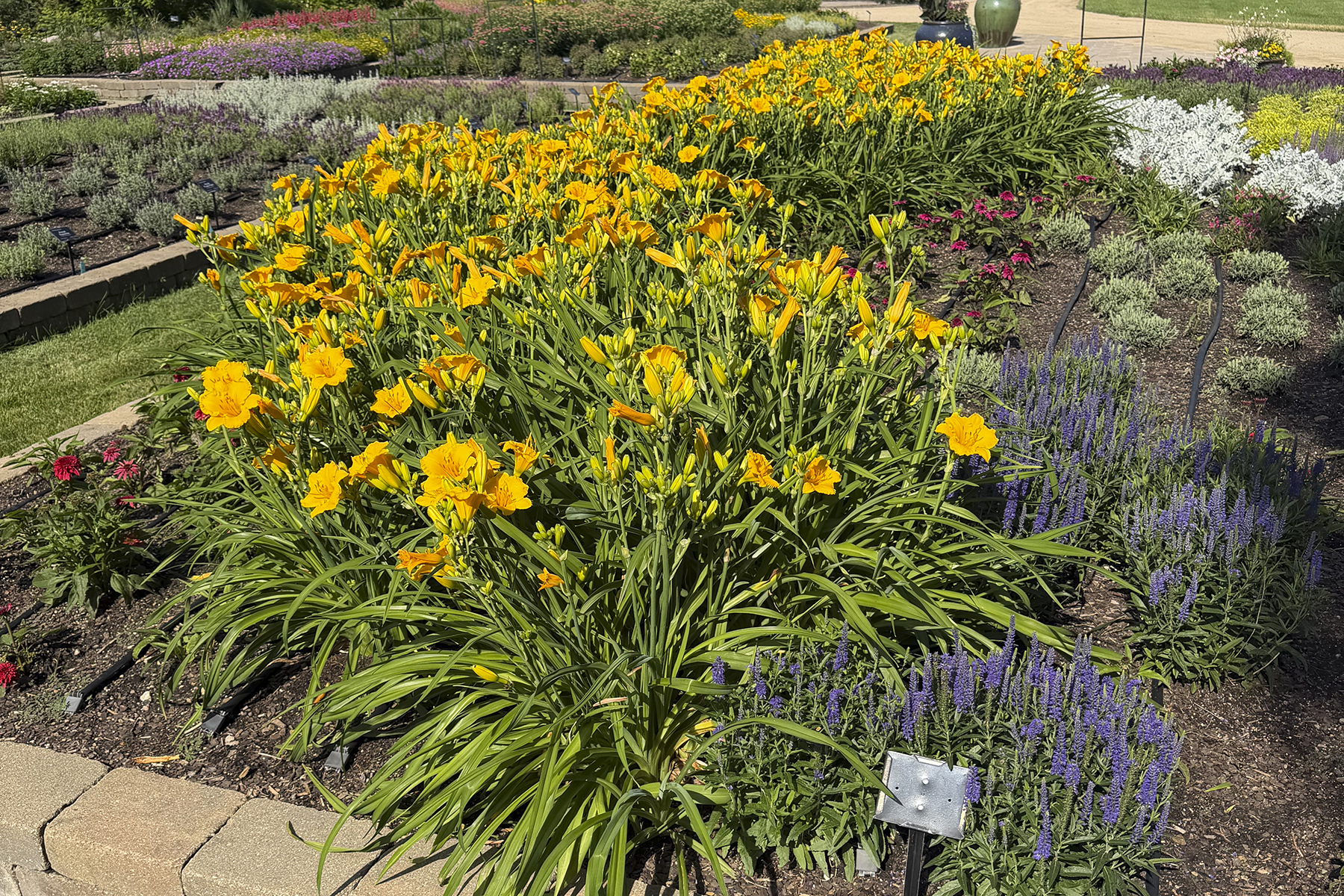
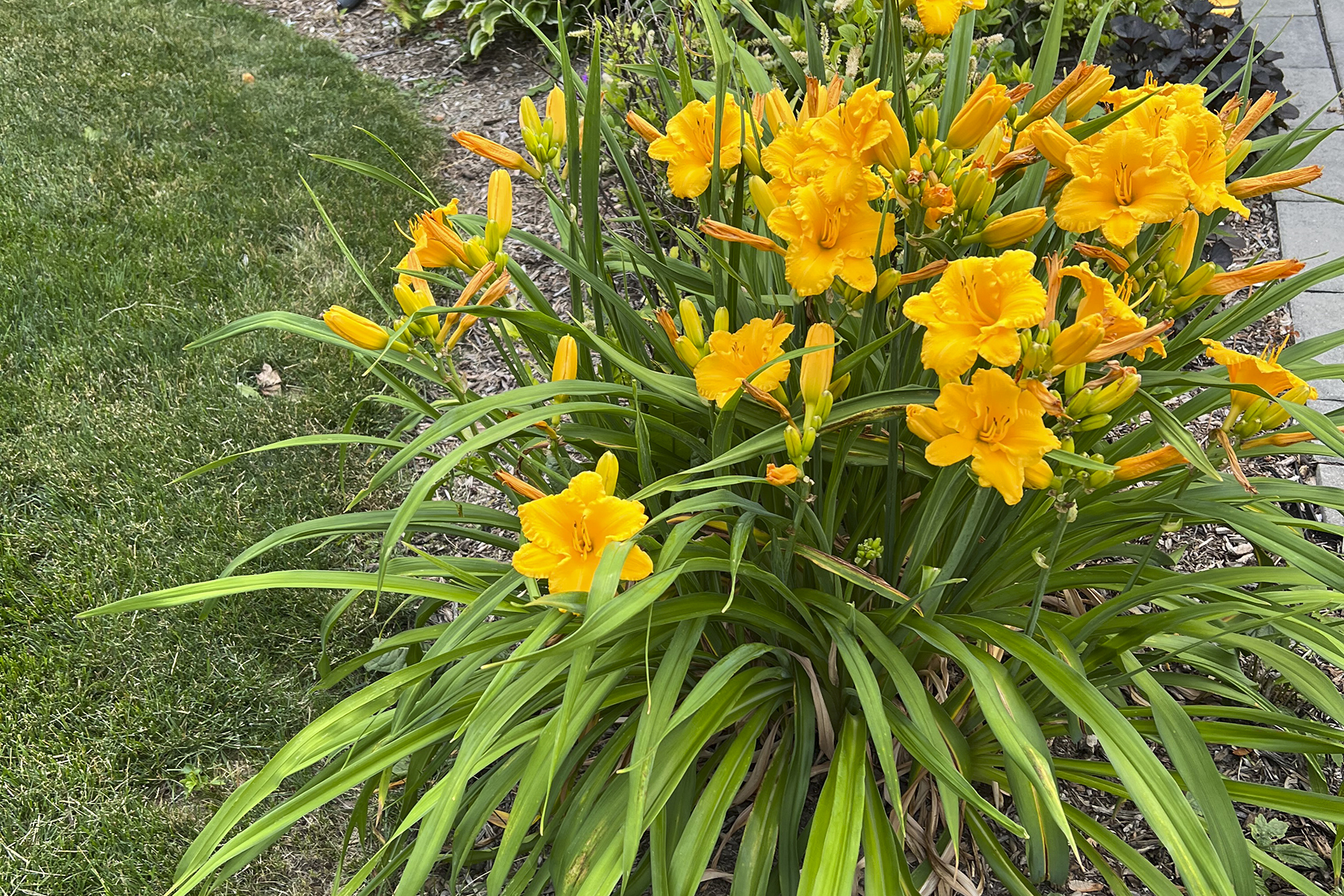
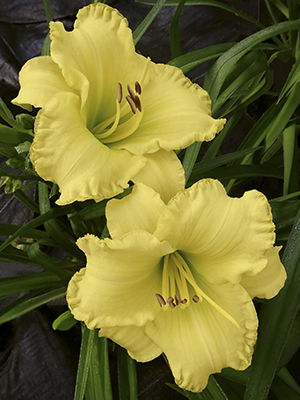
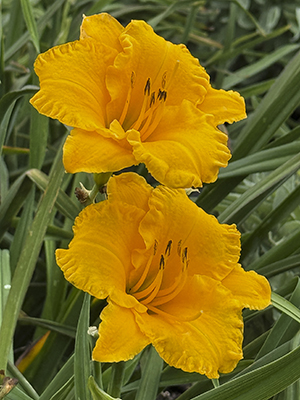
This Golden Yellow shows the rough size, habit and concurrent show of a DayScape daylilly as a specimen in a home garden planting. Not all DayScapes mature to the same size, however.
Above the frost line
In the North, retailers want to order DayScapes because of their early bloom times. The series was specifically bred for this behavior, so plants can bloom as early as May and maybe even April.
DayScapes are big, beefy daylilies that command respect because of their greater landscape structure, more substantial blooms, and higher bud counts. These are tetraploids blooming alongside the early diploids in May, or in retail terms: Standard and Premium blooming side-by-side on the bench at peak traffic.
DayScapes also bundle in other retail-friendly features to support the sell.
- Cold opening matters because an early Northern daylily has to function in cool spring weather. Daylilies try to inflate their blossoms early in the cold morning, but the nose sometimes welds shut and the flower aborts. DayScapes don’t have this bad habit.
- High bud counts generate longer display windows for each scape. The series also has more scapes per fan over time to increase the ornamental value for a season.
- Self-cleaning works differently for daylilies than for bedding plants. Because the scapes rise so high above the fans, daylilies can’t bury their dead underneath new growth. Instead, DayScape breaks off the spent blossoms cleanly and rapidly. If the expired petals cling and linger on the other buds in the scape, rot sets in and ruins the upcoming color display.
- Reblooming is always a desired feature, but it’s important for Southern growers. If your summers are short, you *might* notice it but if your summers are long, you’ll notice it.
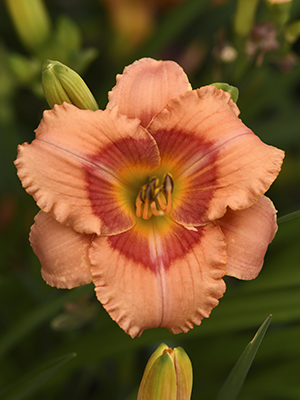
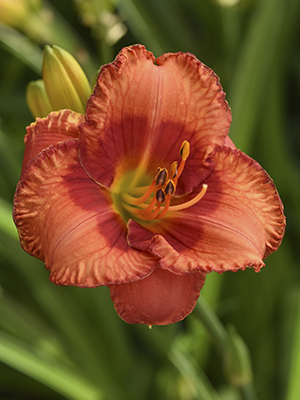
The short ones bloom about 14 to 20 inches in height. Coral Blaze is a little shorter and Lemon Meringue is a little taller. Coral Frill has the heaviest ruffling in the series.
 |
 |
 |
| Coral Blaze | Coral Frill | Lemon Meringue |
Below the frost line
None of these details matter once the winters become mild. Retail sale of Southern daylilies is a thing, but that market used to be dwarfed by the gargantuan sales of commercial plantings. Hemerocallis was everywhere until daylily rust rolled in big time in the 2000s.
Rust arrived at almost exactly the wrong time. Daylilies had been sold as extremely durable, low-maintenance landscape perennials. Suddenly Southern users had a foliar disease that could make them ugly enough to require fungicides or cultivar replacement. Reliable became unreliable, and interest waned for daylilies as a serious landscape solution.
For Southern growers, then, robust rust resistance is the signature feature. Not in a single cultivar, mind you, but in a complete series. DayScape revitalizes a potentially huge regional market for growers and buyers in the Southeast because the series has made the daylily a viable player again.
It helps that Darwin (supply chain) and Le Petit Jardin (breeder) developed DayScape in Florida. Because the gene pool and testing trials have been surrounded by daylily rust for over two decades, resistance is Job One in order to protect the investment. The innovation here is the complete package: strong resistance in a full series with a slew of retail benefits sitting on top of it.
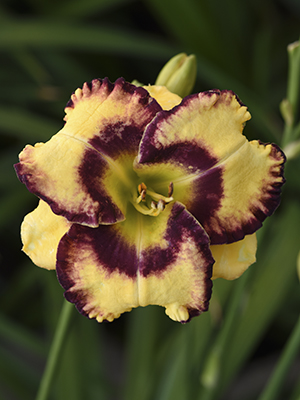
The most dramatic bloom of the series, Berries and Cream is also the tallest, rising up to 40 inches. It is the only DayScape with a layered eye-and-edge pattern. The next tallest ones, Golden Yellow and Scarlet Burst, bloom about 28 to 32 inches.
 |
 |
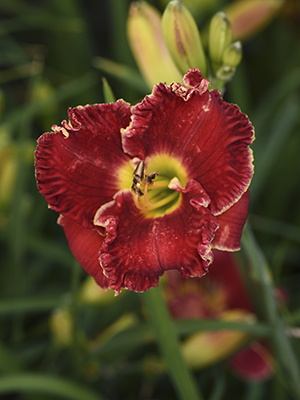 |
| Berries and Cream | Golden Yellow | Scarlet Burst |
A word about daylily rust
Genetic resistance to *Puccinia hemerocallidis* is unquestionably real. A University of Tennesse study inspected the resistance mechanism and found that successful plants shut down fungal development through host-cell death at the infection site. This action stops the fungus so it never spreads. If the plant reacts quickly, the results are so microscopic our eyes never see it. Visually, plants with strong resistance look untouched.
Strong trial data from Penn State revealed exceptionally healthy plants. At the University of Georgia, trials showed the prolonged flowering in action. These are promising results, but I do need to ring a note of caution. This series is just entering the market, and daylily rust has regional variation. Although DayScape’s resistance is robust, it is not *rustproof*. Your mileage might vary, so local testing is always a good idea.
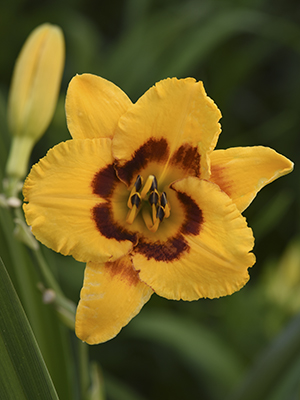
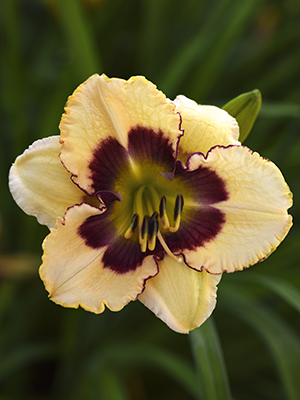
The middle Dayscapes sit roughly six inches below Golden Yellow at about 25 to 32 inches in height. Note the deep saturation of color in Scarlet Ribbon. Red is a hard color to get in right in hemerocallis.
 |
 |
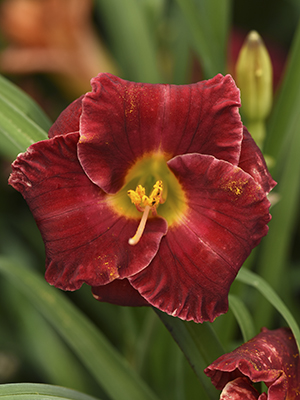 |
| Golden Blaze | Peach Flame | Scarlet Ribbon |
Build that beefy fan
A landscape planting of Dayscape Golden Yellow at the Ball Horticultural gardens. It gives you some idea of how they look planted in a line, along with some veronica and dianthus for size comparison.