
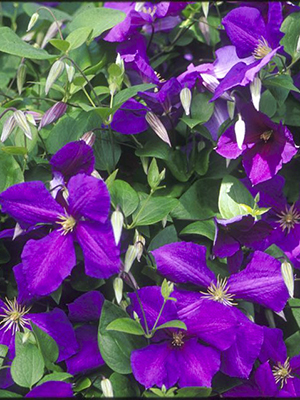
For many buyers, clematis begins and ends with one familiar name: Jackmanii. If your grandmother had a purple clematis growing up the side of her house, it was probably that one. Customers still ask for it by name, and no other variety comes close in annual sales. If you sell one clematis, make it Jackmanii.
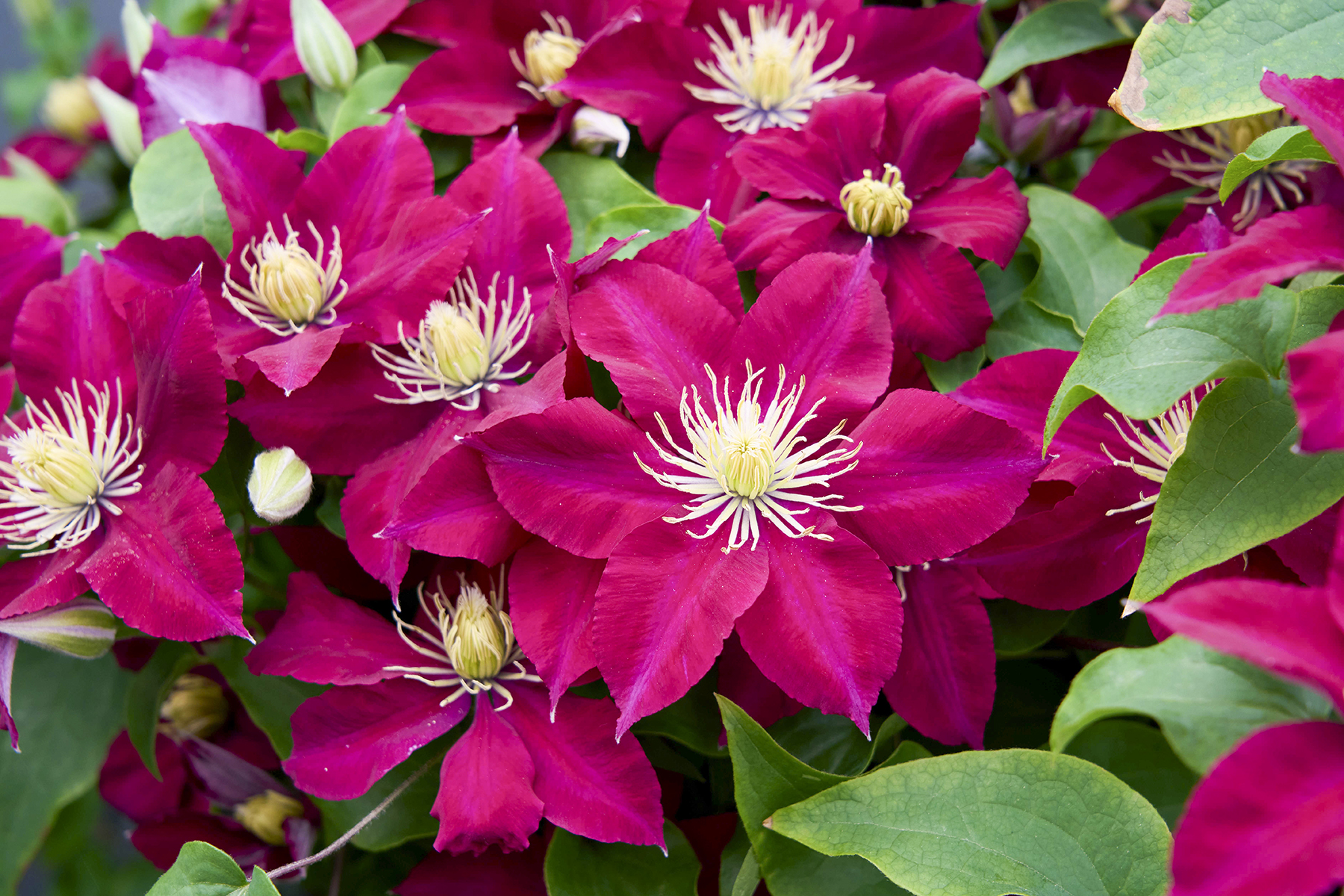
A breeding challenge for clematis are the true reds—they are pretty rare. The best one right now is Elpis.
Offer more than one
Today’s clematis market extends into a broad blooming window from spring to fall. Beyond Jackmanii, the next step focuses on spring-blooming varieties, sitting on retail benches in late April and early May, covered in flowers. Then it showcases the possibilities the genus has to offer—a collection of garden stories wrapped in plants.
A simple program would start here:
- Jackmanii remains the essential anchor
- Betty Corning—the fragrant bell, lightly colored
- Diamantina—a repeat bloomer and heavily ruffled double
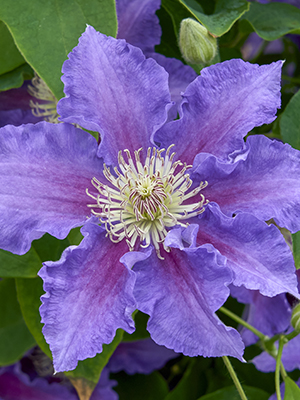
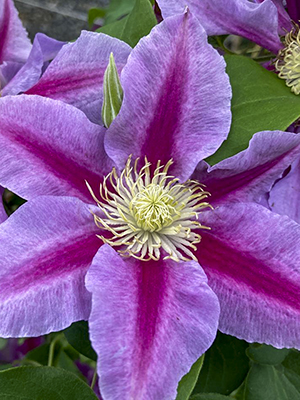
- Baroness Fookes—the compact patio vine, purple with magenta stripes
The Jackmanii is the best known, double up on its inventory. Spread the rest of the numbers evenly, keeping a strong distance between colors and forms.
 |
 |
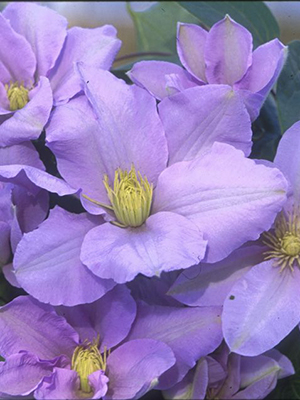 |
| Jackmanii | Baroness Fookes | Silver Moon |
A more complete collection would build off of it:
- Silver Moon—a light mauve that loves the shade
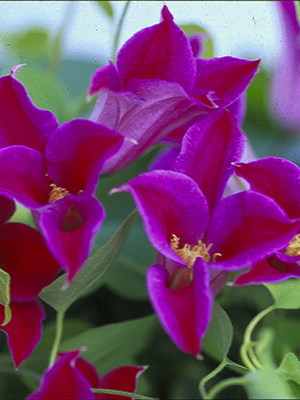
- Princess Diana—a purple texensis with a cream center, for garden hotspots
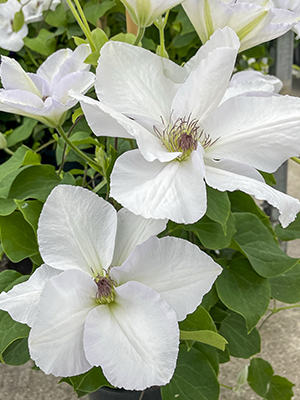
- Gurnsey Flute—pure white
- Crystal Fountain—an unusually fuzzy double in lilac
For order amounts, keep inventory numbers low until you figure out the tastes of the local neighborhoods. Double up on Jackmanii—it will be your number one without question. Ernest Markham (dark magenta) and Comtesse de Bouchaud (rose pink) will be numbers two and three, but clearly behind Jackmanii.
Princess Diana has a strong bell shape. Gurnsey Flute open upright like a wine glass before tipping over and fully opening. Crystal Fountain is double with extraordinarily long anthers.
 |
 |
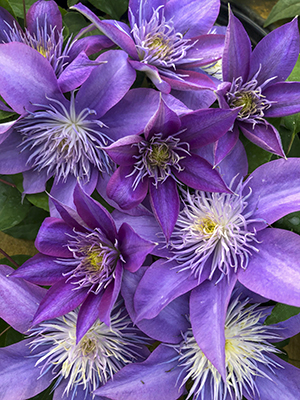 |
| Princess Diana | Gurnsey Flute | Crystal Fountain |
Advantages of a collection
All fanbases have their collector wing, and clematis aficionados are particularly strong in number. They’re also willing to drive out of their way for a good selection. Tailor your collection around color because most clematis varieties grow well nearly everywhere (add some shade in the Deep South). Take color cues from best-selling pansies, petunias, calibrachoas, and combos. Keeping a finger to the wind—darker, deeper colors tend to sell faster.
That being said, clematis does have breeding trends, and they follow a trajectory familiar to most perennial growers.
Extended Bloom: Traditional varieties produce one spectacular flush before settling down for the season. Modern cultivars focus on repeat blooming. Here’s the breakdown:
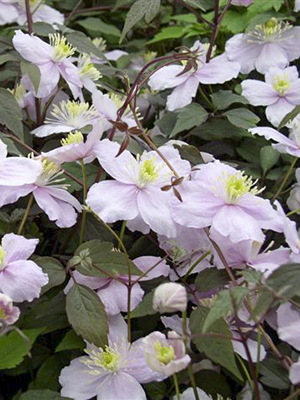
- Type I = Blooms on old wood. Do not cut the vines down at the end of the season. (montana Mayleen, light pink)
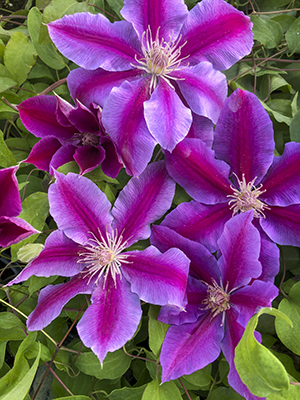
- Type II = Blooms on both old wood and new wood. This creates a first year blooming effect. In the second year, the color season is extended because the old wood blooms earlier than the new wood. (Doctor Ruppel, magenta with pink margins)
- Type III = Dies back to the ground each year, then sprouts from the ground the following year. Clean these vines at the end of the season. (viticella Venosa Violacea, dark purple with light central stripe)
The montana species, like Mayleen, bloom on old wood profusely. Keep their vines over the winter. Dr. Ruppel will bloom on both new and old woods, extending the season. Viticella species like Venosa Violacea are decidious. Their vines die back to the ground, then regrow each year. These vines, you prune to the ground after frost.
 |
 |
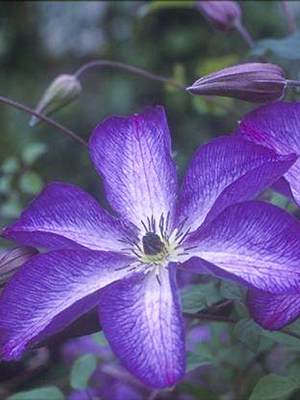 |
| montana Mayleen | Doctor Ruppel | viticella Venosa Violacea |
Plant Size: Clematis vines usually grow eight to twelve feet long. A new crop of cultivars target dwarf varieties, keeping vines four to eight feet. These compacts fit better into today’s smaller yards and gardens. Sara Elizabeth (light pink with dark pink anthers) is a good example.
Flower Form: Larger-flowered clematis provides the dramatic individual bloom, but many collectors seek out the charm of smaller-flowered species and hybrids. If your goal is a fence, arbor, or gazebo draped in color, you want something like the straight species paniculata (tiny, white, dense, and fast growing).
Color Breeding: True red has long been one of clematis’ greatest breeding challenges, with many older varieties drifting toward magenta. New introductions like Elpis deliver the best reds in the category to date.
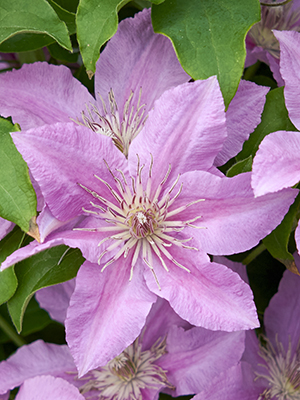
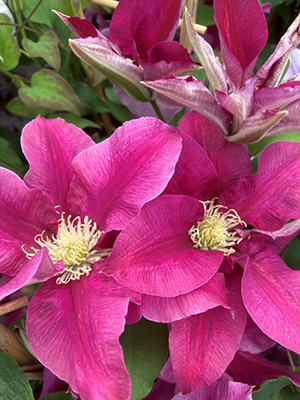
The New Stuff: To keep collectors coming back, it’s helpful to introduce a few new selections each year. Consider Bridgewater (a vigorous pink variety) or Eliza (soft white flowers washed with lavender). The remarkable Queen’s Nurse produces distinctly different flowers on old and new growth, giving gardeners two unique floral displays on the same plant.
The most unusual clematis for 2027 is Queen's Nurse, which displaces a different flower on old wood than it does on new wood.
 |
 |
 |
| Bridgewater | Queen's Nurse | Queen's Nurse |
Growing out clematis
Production folds into standard perennial practices. Let the soil dry out between irrigations and maintain good air circulation.
Clematis’ biggest quirk is planting depth. Set liners deeper than normal to cover the first set of leaves (like a tomato). The extra depth encourages additional shoots from below ground and protects the crown if rabbits, wind, or accidental damage destroys the top growth. This advice is true for both liners and the finishing pot in home gardens.
menu under Shop Clematis


