Clearing the Clutter Among Dianthus

Written for GrowerTalks
APR 2026 column
01
MAR 2025
Clutter in the dianthus category is a very real issue. Some confusion stems from the plant’s broad and shaggy nature. Nearly all commercial varieties are interspecific to some degree these days. Pinks vs. carnations, sweet williams vs. cheddars—those traditional lines are blurrier than they were ten years ago. Series are fine-tuned to fit specific needs so in my mind, dianthus revolves around the four major jobs it performs for the industry. That’s where the money is.

Other reasons for the clutter are the recent changes to the quarantine on dianthus imports. Beforehand, the quarantine significantly slowed the flow of innovations into the country. Now, American growers see the global dianthus market, not just a subset. There are more series to propagate, more plants to finish, more production variations to retail. Wow.

Let’s dig in.


Dianthus for the spring holiday are controlled by their light accululation. I Love U blooms earliest of the batch. Most tend towards pink, a dianthus strength, but Early Love does have a red.
PAN Elegance 006 PAN Elegance 010
I Love U (Valentine's/Early Easter) Early Love (late Easter) Pink Kisses (Mother's Day)

The gift and decor market

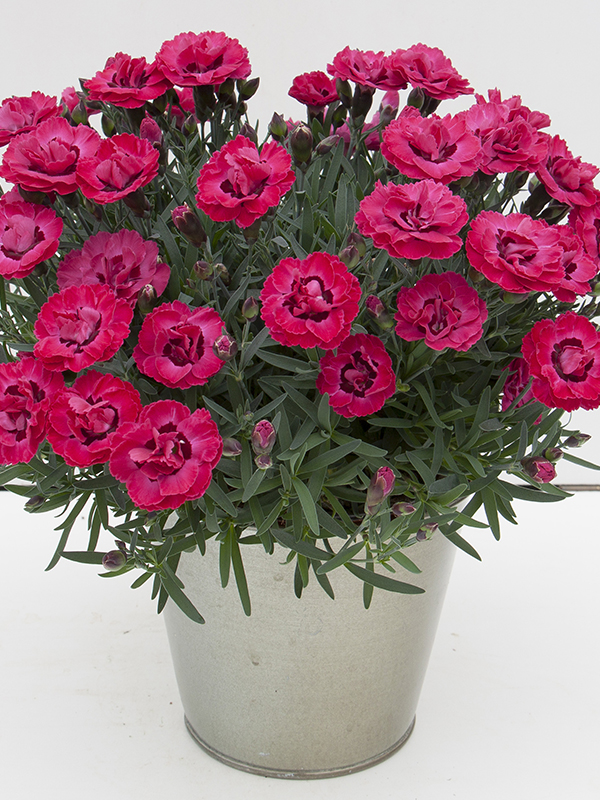
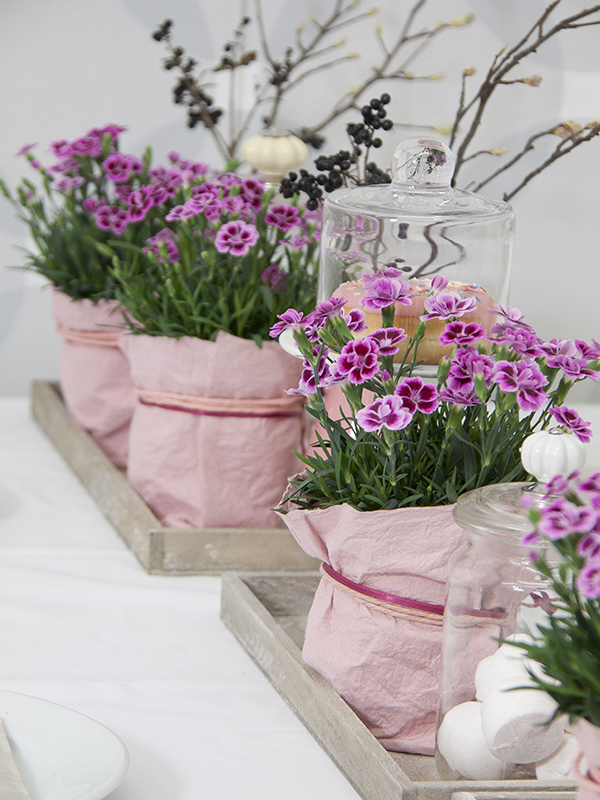
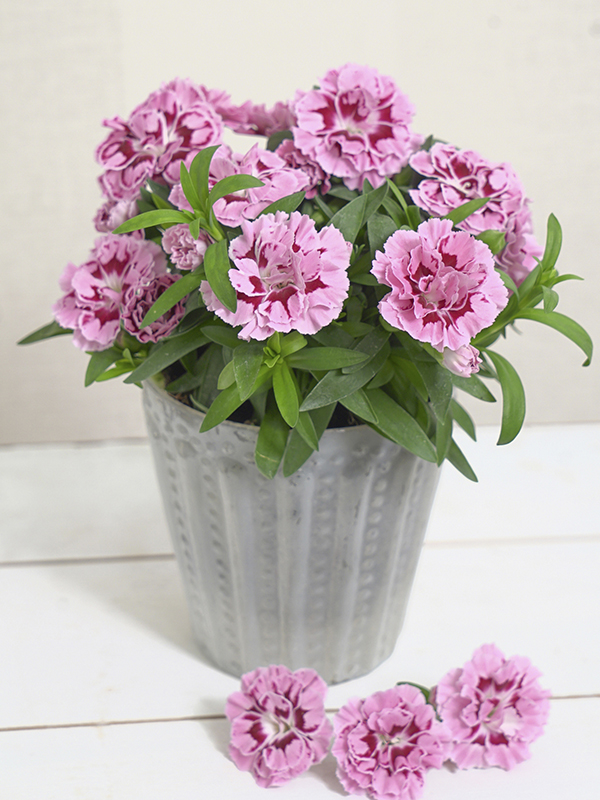
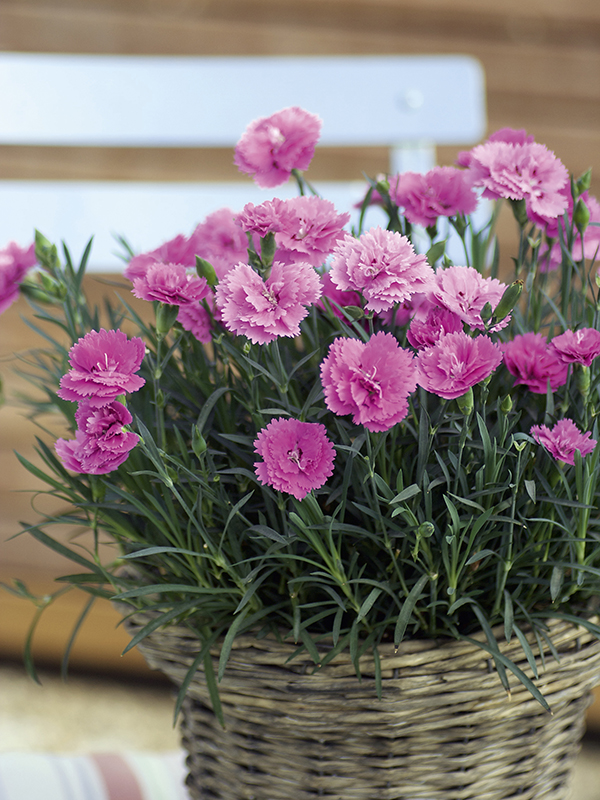
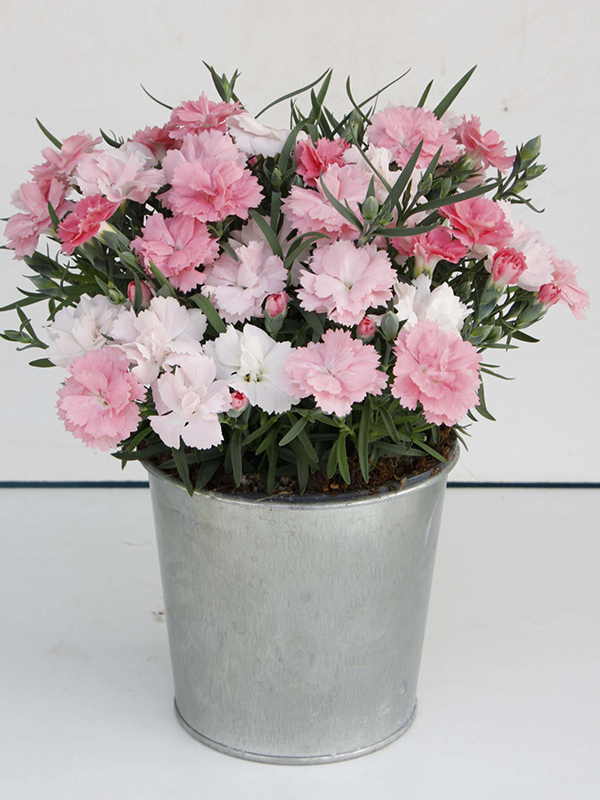
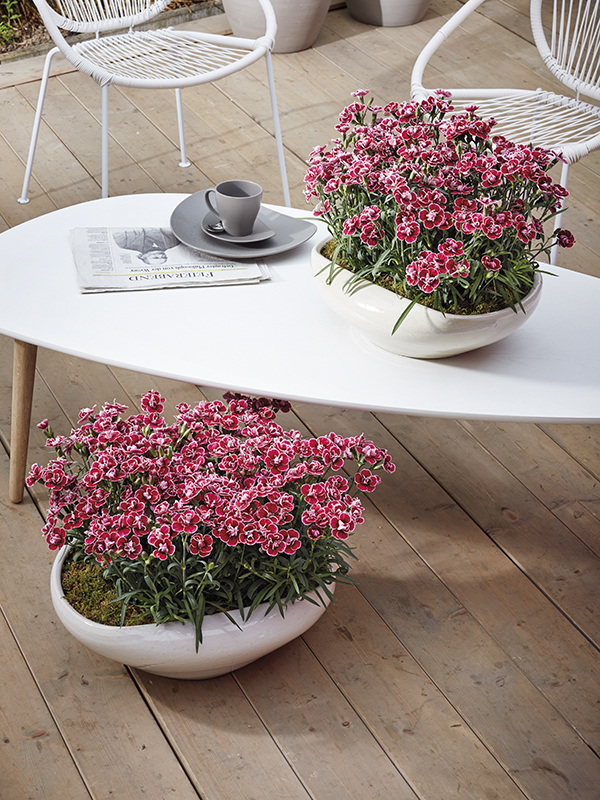
Dianthus has a role in the trend to build early spring shoulder sales with cool-growing, cool-loving material. It can be positioned as a pansy alternative, but potted dianthus are digging into the calendar as early as Valentine’s Day. Those soft pink blooms become expressions of motherly love or a familial kiss.

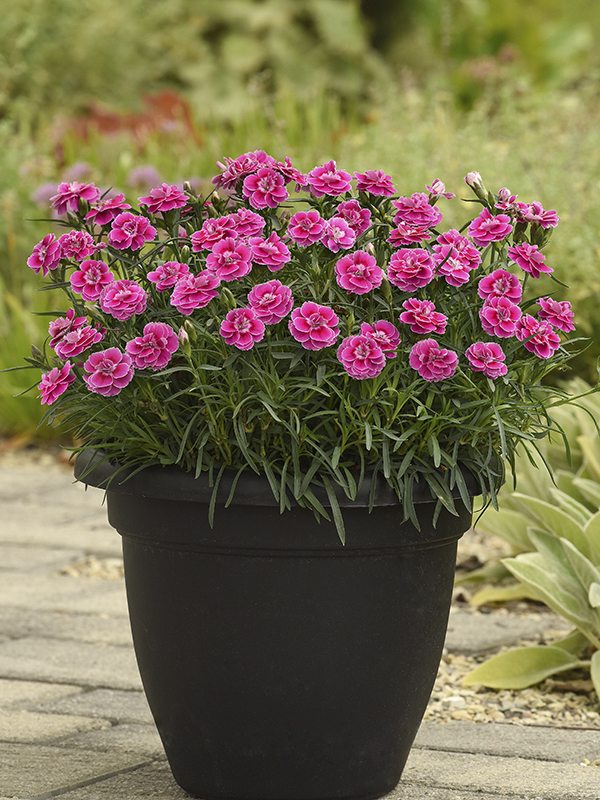
We expect these dianthus to live out their lives in a container, usually the one sold at retail. Although the blooming window is broad for dianthus in general, specific holidays work best with cultivars tuned to the appropriate light and blooming conditions.

Valentine’s Day: Use I Love U here. Dianthus needs light accumulation to trigger buds so you want a variety that doesn’t need as much to get started. I Love U blooms early and reliably into this window.

Easter: I Love U is often on the shelves at Trader Joe’s but the holiday swings widely through the weeks. Later dates work better with Early Love.


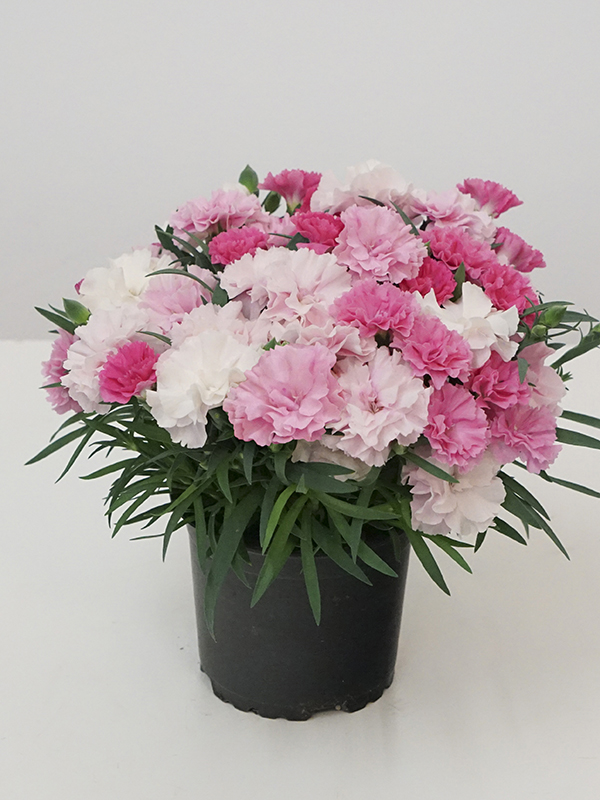
The Oscar series is the one bred for annual pot production in volume. You can just crank out these puppies quickly and easily. The lack of grief is important when keeping costs in control and margins predictable.
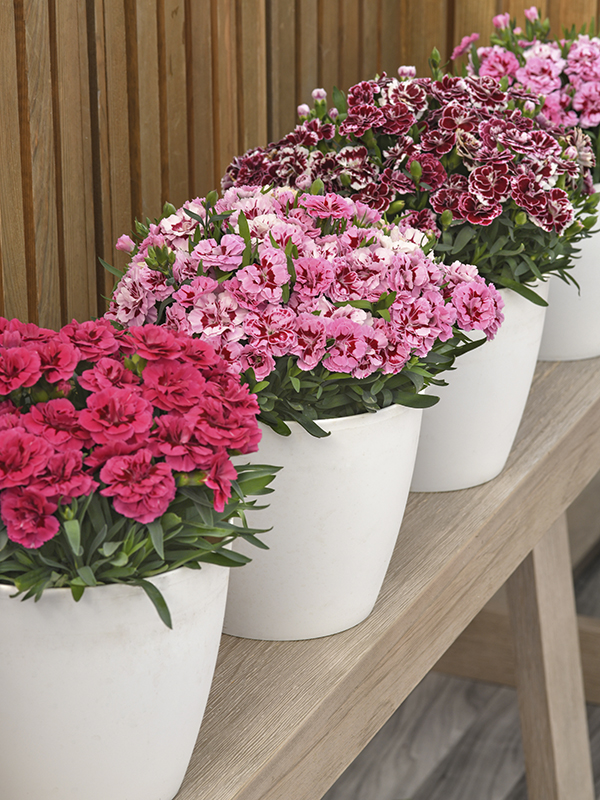
PAN Elegance 006 PAN Elegance 010
Oscar Cherry Velvet & Purple Star Oscar Violet Pink Oscar Purple Star

Mother’s Day: Pink Kisses is the choice. Europe grows acres of the plant for the holiday. It also comes with POP designs, if you have a marketing department or want to dress up your rolling carts.

Fall Sales: There is an effort among Northern gardeners to probe for sales in the back shoulder season. Use Capitán in products like an eight-inch bowl. It has more vigor to get the bloom height over companions like ajuga, sedum or lysimachia.


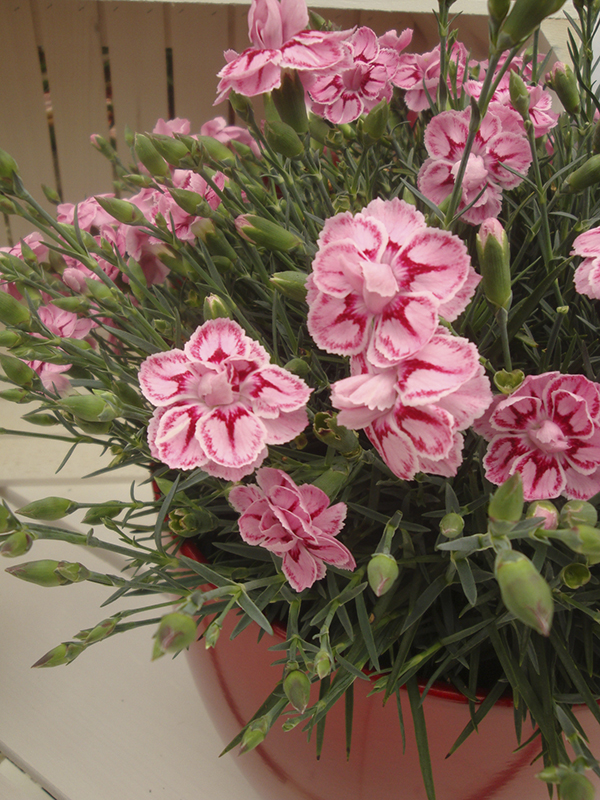
The EverLast series is a perennial series is a retail-forward series that emphasizes diversity. It has the kicks and flourishes that give the dianthus category its charm.
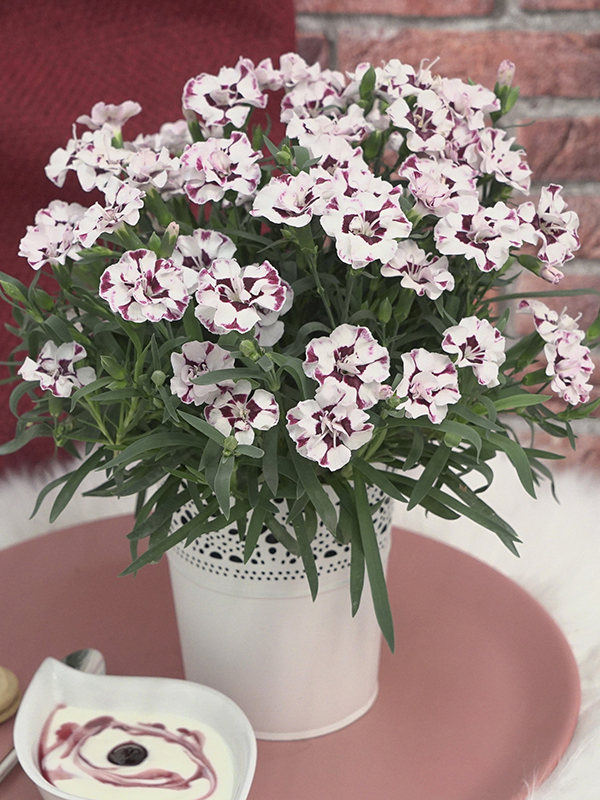
PAN Elegance 006 PAN Elegance 010
Everlast Cherry Swirl Everlast Orchid Everlast Pink White

Annual beds and baskets

Display defines the job. We want the flashy color performance when we want it, when it matters. Annual beds are dug up seasonally, and combos are tossed and refreshed so we don‘t need a long-term committment.

If you need to produce a SKU in volume at a good price, and the number of production weeks is important, take a look at the Oscar series. It’s a polished product with tons of colors, is very easy to grow, and its quick turns fit into tight production windows. You can crank these pots into a very dependable benchrun.


Pashmina Pink and White nestled among some creeping phlox. This series takes the consistent benchrun philosophy of the Oscars and applies it to perennial dianthus.
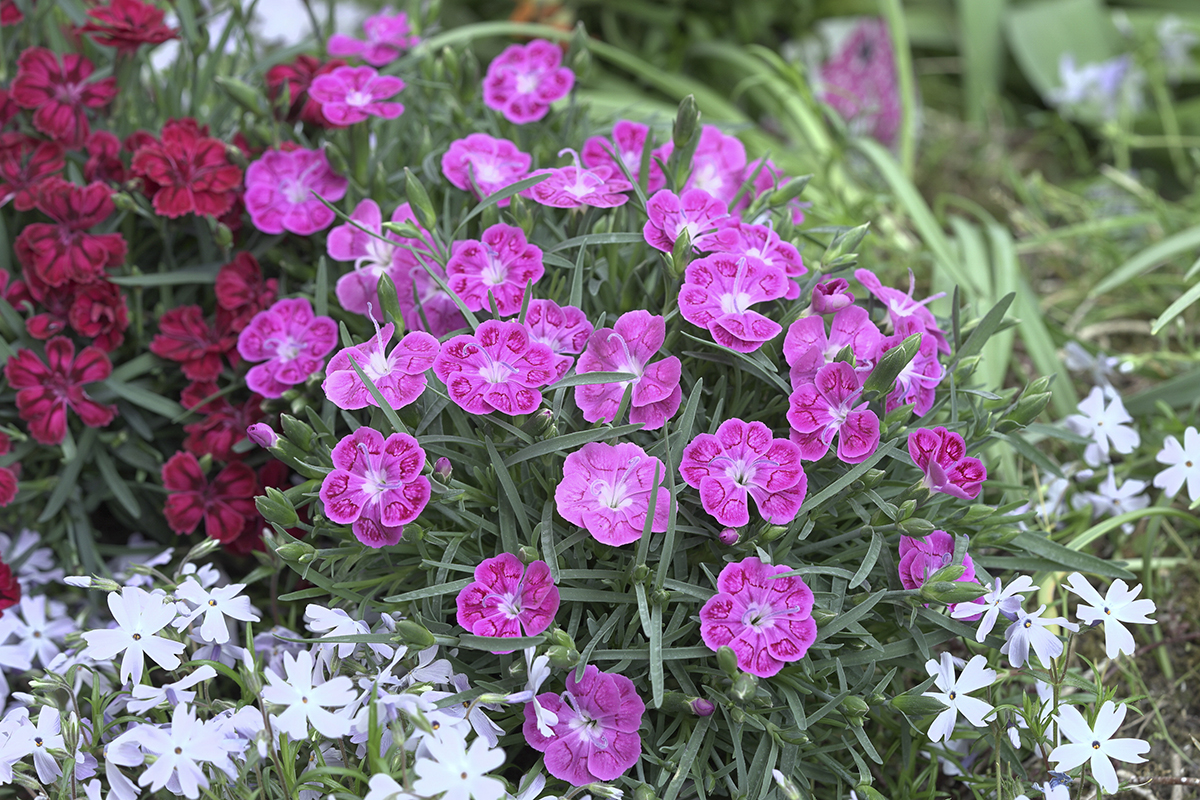
Long-lasting landscapes

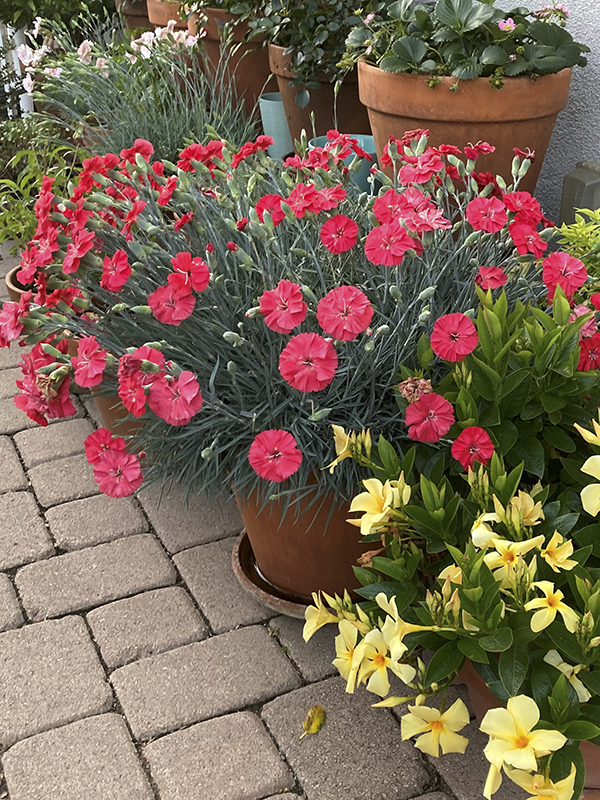
 Home gardens and commercial landscapes look for that year-over-year appeal. A continuous stream of blooms is their hallmark. Perennials sell more than annuals in most places, so these dianthus can be programmed into premium categories. Two series come to mind.

The EverLast series is where to go when you want to offer diversity. It’s retail-tuned with variety at its heart. Each cultivar is a personality, a potential horticultural companion, sitting at a garden center. Some are short, some are tall, some are singles, some are doubles. This is a series where diversity is a competitive advantage. It appeals to in-house retail operations who grow dianthus strategically because they want to be known as the Dianthus Place.

Pashmina is different. Consistency is the advantage: same height, same habit, same protocol, swappable. All the colors finish at the same time. It’s the same strategy as the Oscars applied to perennial dianthus. If you want a nicely polished product made with predictable components at an attractive price, shipped in volume inside its scheduled window, you want Pashmina.


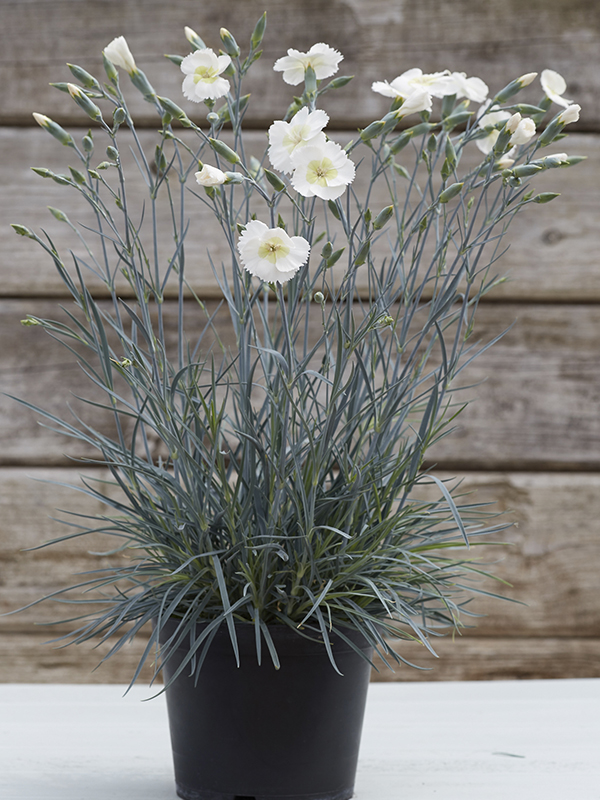
American Pie is the series from the English breeder Whetman Plants. These are garden dianthus that offer much longer stems for cut flower gardens, table vases or just for the look.
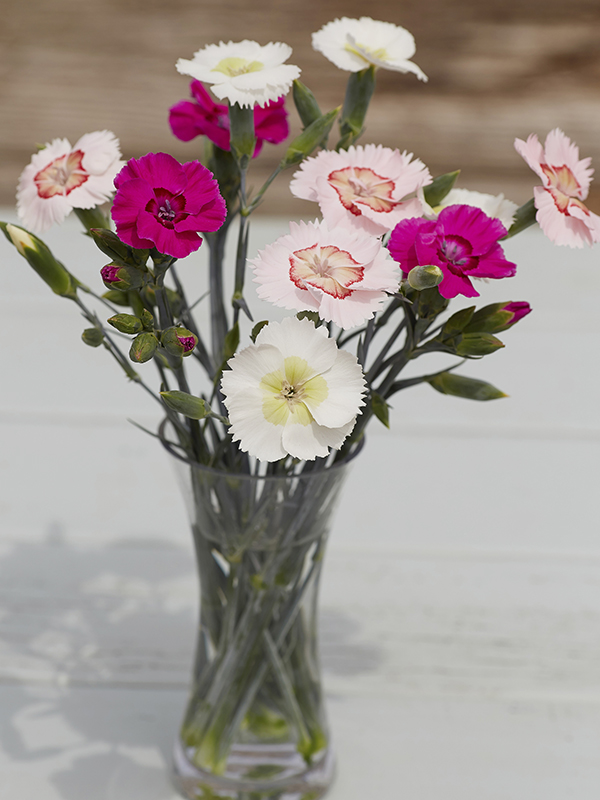
PAN Elegance 006 PAN Elegance 010
Notice the stem length American Pie Key Lime Pie American Pie Orange Meringue

Cut flower farms and gardens

Dianthus we work with don’t get super long like florist carnations. Think American Pie with stems about ten inches, which puts it into a tabletop bouquet, something you hold in your hands instead of your arms. This is a very good size for cut flower gardens that need a mid-height plant for both garden and vase. American Pies are primarily single blooms with very large flowers. Please note these are very perennial dianthus. They need vernalization to flower profusely.

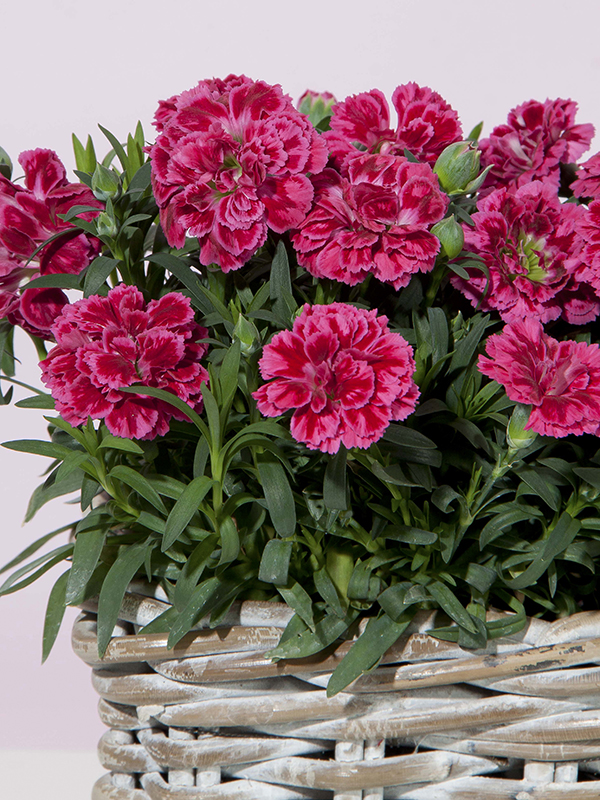
If you want more of a double carnation style, look at some of the Premier series. These are also zone five plants with stems a little shorter than American Pie, about six inches.


The two on the left are from the Capitan series, usually grown as annuals. These dianthus are more vigorous, allowing Northern gardeners to bring height to their containers. The one on the right is from the Premiere series. It has double blooms on longer stems.
Capitán Magnifica Dianthus2025 AAS winnerSelecta 2024 Setting, Vegetative08.09.23 West Chicago, Mark WidhalmJob: 23498601CapitanMagnificaDianthus.JPGDIA23-31356.JPG PAN Elegance 006 PAN Elegance 010
Capitán Magifica Capitán Red White Eye Premiere Starburst
 

A word about production

Dianthus is a fizzy froth of over 300 different species blended and distilled into highly focused drafts. Even the ones groomed for consistency are consistent inside themselves, less so with the rest of the genus. All dianthus have kinks and quirks of their own, so you should attention to the series name when digging for protocols or asking for technical help. The details are no more challenging than a footstool, but you still bark your shin when you wander in the dark.

Popular Articles

01 November 2024
Introducing an ornamental native
28 September 2023
The supply chain is the choke point.
01 May 2024
Size defines the wax begonias, not colors.
01 February 2023
Recommended varieties of tomatoes, strawberries, peppers and greens for an Edible Basket program.
01 June 2023
The money isn’t made at the national level. It’s regional.
01 February 2024
Pure white on a dark leaf is the unicorn.
01 December 2023
Supply falls short of demand.
01 November 2023
The basket’s best friend, and why.
01 January 2024
Dappling turns a weakness into a strength.